Why 90% of professionals still hesitate to speak English after 5 years of learning


You may feel shocked and upset when you still pause before speaking English, even after many years of learning. You are not the only one—90% of professionals have this problem. Most people deal with many problems. These include feeling embarrassed, being scared of making mistakes, and not feeling sure of themselves. Sometimes, you cannot think of the right words or you worry about how you say them. It can seem hard to practice in real life. Here are the main things that make it hard:
Barrier Type | Specific Barriers | Ranking Order |
|---|---|---|
Language Barriers | Vocabulary, Grammar, Pronunciation | Vocabulary > Grammar > Pronunciation |
Non-Language Barriers | Psychological, Cultural, Learning Methods, Environmental | Psychological > Cultural > Learning Methods > Environmental |
You might notice these things happen to you. Remember, this is normal and you can get past it. With new tools like Fluently, you can grow your skills and feel more sure of yourself.
Key Takeaways
It is normal to feel nervous when speaking English. Many professionals have the same problems, so you are not alone.
Practicing in safe places helps you feel braver. You can join conversation clubs or use language apps to get better.
Making mistakes is part of learning. See them as chances to grow, not reasons to stop.
Practicing a little every day is important. Speak some English each day to get better and feel more comfortable.
Having a group to help you can make you feel braver. Be around people who cheer you on and help you practice.
Why 90% of Professionals Hesitate To Speak English
Psychological Barriers
You might wonder why you freeze up when you need to speak English. You are not alone. Many people feel the same way. In fact, 90% of professionals face these mental blocks. You may feel anxious or shy. Sometimes, you worry about what others think. You might even feel embarrassed if you say something wrong. These feelings can make you want to stay quiet.
Here are some common psychological barriers you may notice:
Anxiety can make your mind go blank when you try to speak.
Shyness can stop you from joining conversations.
Fear of making mistakes can hold you back from speaking up.
You may prefer your native language because you feel safer.
These barriers are normal. You do not have to feel bad about them. Many people, even after years of learning, still face these challenges. You can overcome them with the right support and practice.
Fear Of Mistakes And Judgment
Have you ever felt nervous about speaking English in front of others? You are not alone. Most people worry about making mistakes. This fear can make you stay silent, even when you know the answer. For 90% of professionals, the fear of being judged is a big reason for hesitation.
Let’s look at what happens:
You might worry that others will laugh if you say something wrong.
The fear of criticism can make you avoid speaking.
You may feel tense or nervous before you speak.
Some people stay quiet because they do not want to make errors in front of their peers.
Research shows that fear and shame can stop you from speaking. You may lose confidence and motivation. You might even avoid meetings or group discussions. But when you have a supportive environment, it becomes easier to try. You start to see that mistakes are part of learning.
Tip: Remember, everyone makes mistakes. Even native speakers do. The key is to keep trying and not let fear stop you.
Lack Of Real-Life Practice
You may know a lot of grammar and vocabulary. Still, you might find it hard to speak in real situations. This is common for 90% of professionals. You may not get enough chances to use English at work or in daily life. Without practice, it is easy to forget words or struggle with pronunciation.
Here are some reasons why real-life practice is hard to get:
You may not have English-speaking friends or colleagues.
Work meetings can feel too formal to try new words.
You might not want to make mistakes in front of your boss or team.
Sometimes, you cannot recall words quickly when you need them.
Technical challenges, like mastering vowels or speaking smoothly, can make you hesitate.
When you do not practice in real situations, you may feel stuck. You might understand English but still pause before speaking. The good news is, you can build confidence with regular practice. Start small, and you will see progress over time.
Social And Workplace Influences

Pressure In Professional Settings
Speaking English at work can feel stressful. You might worry about your job or pay. Some people need English to stay safe at work. Many workers learn English because it helps them do their jobs. If you have trouble with English, you may fear missing key details. You might also worry about making mistakes at work.
You may use English to talk about money or safety.
Some jobs need you to speak English with many people.
Language barriers can make work harder and hurt your pay.
This pressure can make you freeze or doubt your words. You are not alone. Most professionals feel this stress every day.
Societal Expectations
People often expect you to speak English well. This is true in global companies. You might think others speak better English than you. This can make you feel shy or nervous. Sometimes, you only use English in meetings or talks. You may avoid using it outside of work. One student said,
"Although most students like L2 communication, one student, Halie, said she only uses English for school. She avoids using it outside class. She said she struggles with 'not knowing how to connect and interact with people from diverse backgrounds.'"
You may feel you must reach a certain level. This can make you less sure of yourself, even if you know English.
Peer Comparison
It is easy to compare yourself to coworkers or friends. You might see others speak English more easily. This can make you doubt your own skills. In formal places, you may feel more nervous and unsure.
Setting Type | Characteristics | Impact on Confidence |
|---|---|---|
Professional | Formal language, high-stakes communication, cultural nuances | Increased anxiety, reduced confidence |
Informal | Supportive interactions, familiarity, casual language | Greater confidence and ease in communication |
When you watch others speak well, you may feel left out. Remember, most people feel this way sometimes. You can grow your confidence little by little.
Impact On 90% Of Professionals’ Communication
Missed Opportunities
When you hesitate to speak English, you can miss out on many chances at work. You might want to share your ideas in meetings but stay quiet. Sometimes, you want to join a team chat or write an email, but you worry about making mistakes. This can keep you from connecting with others and showing your skills.
You may find it hard to speak up in meetings, so your ideas go unheard.
Writing emails or reports can feel stressful, and your message may not be clear.
You might avoid small talk or team events, which can make you feel left out.
If you do not speak up, others may not see your true value. You could miss out on projects or chances to lead.
Reduced Confidence
Hesitation can make you doubt yourself. When you hold back, your confidence drops. You may feel nervous before meetings or worry about being judged. This can make you avoid speaking even more.
You can’t become confident by avoiding opportunities to practice confidence. Clarity comes from speaking, fumbling, and learning—not from staying quiet.
Look at these numbers:
Evidence | Description |
|---|---|
85% | Feel that English is critical for work |
60% | Use English on a weekly basis |
72% | Believe their jobs would be easier with better English |
27% | Feel they can fully express themselves in English at work |
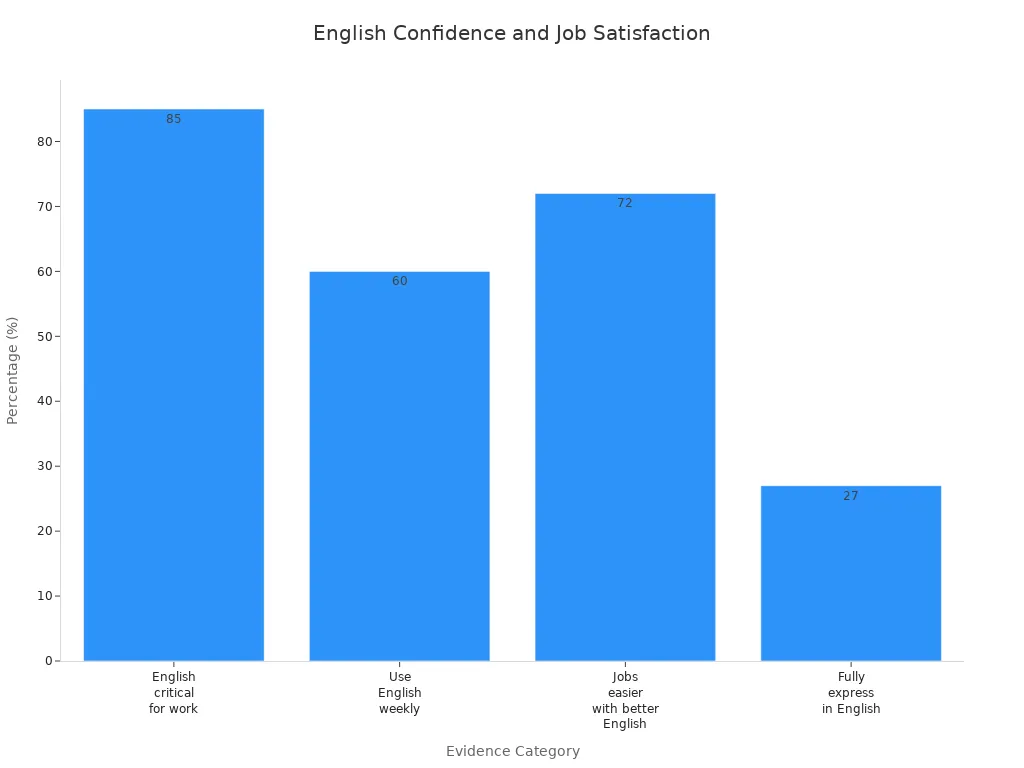
When you see these numbers, you know you are not alone. Most people want to feel sure when they speak English at work.
Career Limitations
If you keep hesitating, your career can slow down. Some companies look for people who speak up in English. If you stay silent, you might not get picked for big projects or promotions. In some places, strict language rules can block your growth.
Some people lose out on leadership roles because they do not speak up.
Clients may judge you by how you talk, not just what you know.
Staying quiet in meetings can make others think you have nothing to add.
Many skilled workers do not get jobs or promotions because of language barriers.
You have the skills, but hesitation can hide them. Remember, 90% of professionals face these same challenges. You can take steps to show your true abilities.
Overcoming Hesitation: Practical Strategies

Small Steps And Consistent Practice
You do not need to make big changes overnight. Start with small steps. Speak a few sentences each day. Practice saying words out loud. Record yourself and listen back. Notice where you pause or use filler words. Try to slow down and speak clearly. Focus on one thing at a time, like vowel sounds or using pauses for effect.
Articulate words and sounds to make your speech clear.
Keep a steady pace so your words do not blur together.
Use pauses to give yourself time to think.
Project your voice, but do not strain.
Listen to native speakers and repeat what you hear.
You can use AI tools like Fluently to practice daily. These tools give you instant feedback and help you track your progress.
Tip: Consistency matters more than perfection. Practice a little every day.
Safe Practice Environments
You need a place where you feel safe to try. Practice with friends, family, or in small groups. Join conversation clubs or use language exchange apps. These spaces let you make mistakes without fear. You can also use AI speaking coaches for private practice.
Use apps to connect with others for language exchange.
Record your speech and compare it to native speakers.
Safe spaces help you relax and focus on speaking, not on being perfect.
Mindset Shifts
Change how you think about mistakes. Mistakes help your brain learn and grow. When you make a mistake, your brain adjusts and gets better next time. Try to see each error as feedback, not failure.
Remind yourself that everyone makes mistakes.
Notice when you feel anxious and take a deep breath.
Celebrate small wins, like trying a new word.
Learners who see mistakes as learning chances feel less stress and enjoy speaking more. You can do the same.
Community Support
You do not have to do this alone. Find a group or community that supports you. Start with people you trust. Join public speaking clubs or workshops. Share your stories and ask questions. When you feel safe, you speak more and worry less.
Practice with friends or family first.
Join clubs or workshops for support.
Focus on sharing your ideas, not just perfect grammar.
A supportive community helps you build confidence step by step. Over time, you will notice your hesitation fade and your fluency grow.
You are not the only one who feels nervous speaking English. Many professionals also feel this way. You can get better if you have a positive attitude and practice often. Try these ideas:
Get some phrases ready that make you feel brave.
Think about what you want to say, not just grammar rules.
Find a group that helps and supports you.
Each time you talk, you learn and improve. After a while, you will talk better, feel braver, and find new chances. Do not give up—getting better is possible!
FAQ
Why do I still hesitate to speak English after years of study?
You might know the rules, but speaking feels different. Your mind can freeze when you worry about mistakes. Practice in real situations helps you build confidence. You are not alone—many people feel this way.
How can I practice speaking English if I have no one to talk to?
Try using AI speaking tools or language apps. You can also record yourself and listen back. Reading out loud helps too. Even talking to yourself in English builds fluency.
What should I do if I make a mistake while speaking?
Don’t panic! Everyone makes mistakes—even native speakers. Smile, correct yourself if you can, and keep going. Mistakes help you learn and improve.
How can I become more confident in meetings?
Prepare some phrases before the meeting. Practice your points out loud. Use tools like Fluently for feedback. Start by speaking up once each meeting. Confidence grows with each try. 😊
See Also
Yoodli's Solutions for Tackling Public Speaking Obstacles
NotebookLM's Update Revolutionizes Learning for All Users
Understanding the Hallucination Phenomenon in Language Models
Users of Interview Ace Receive Improved Job Opportunities Fast

© Copyright 2025 LinkstartAI - All Rights Reserved.