SaaS vs AI and the future of AI Agents in 2026


Imagine your business uses computers to do jobs. It can guess what will happen next. It makes every customer feel special. You see results like Acme Corp. They made their money numbers more correct by 30% with artificial intelligence. More people are using it now:
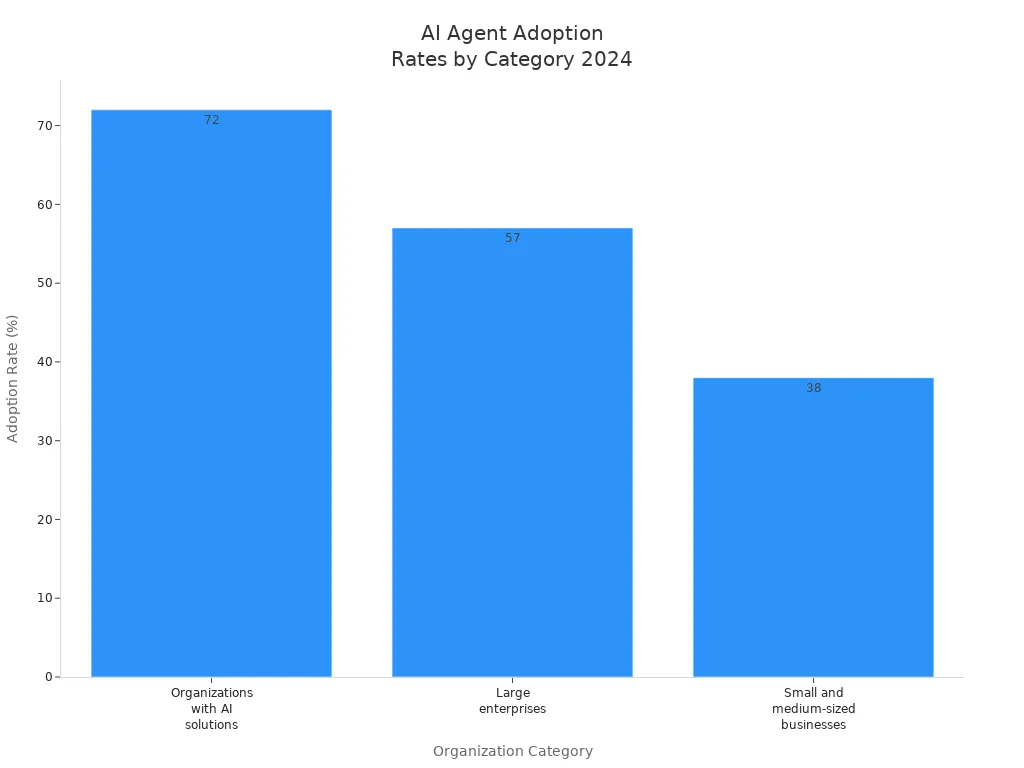
You see big changes in SaaS vs AI. This happens in customer support and fixing things before they break. To win in 2026, you must change fast.
Key Takeaways
AI agents are changing SaaS. They work like digital helpers. They learn and do tasks by themselves. This helps people work faster and better.
Companies will see big changes in SaaS with AI by 2026. The market may grow to $315 billion. Businesses must get ready for these changes.
Security and rules are very important with AI agents. Always look at permissions. Pick vendors you trust. This keeps your data safe.
AI Agents Transforming SaaS
From Tools to AI-Driven SaaS
You have seen software as a service change a lot in the last few years. In the past, you used SaaS as a set of tools. You clicked buttons, filled out forms, and waited for results. Now, you can use ai agents that work for you. These agents do more than follow your commands. They make decisions, learn from data, and act on their own.
You can see this transformation in the way ai-driven saas works. For example, 11x.ai gives you digital workers who handle sales tasks without breaks. These agents research leads, send messages, and book meetings. You do not need to watch every step. The system runs by itself and only asks for your help when needed.
Here is a table that shows how technology has changed the saas industry trends from simple tools to autonomous systems:
Innovation Type | Description |
|---|---|
Natural Language Interfaces | You can talk to the system in plain language. The agent understands and acts for you. |
Automated Query Generation | The system builds complex searches and reports without your help. |
Intelligent Code Generation | The agent writes code for you, making work faster and with fewer mistakes. |
Multi-Agent Collaboration | Many agents work together to finish big jobs and solve hard problems. |
Real-Time Adaptation | The system learns from new data and changes its actions right away. |
You can also see these changes in how agents work across your business:
They finish tasks in systems like CRMs and ERPs.
They watch performance and fix problems as they happen.
They ask for your help only when they cannot solve something.
They keep a clear record of every action.
Companies like Intercom, Coupa, and Moveworks show you what this looks like. Intercom uses an ai agent called Fin to answer customer questions. Coupa has a digital agent for managing spending. Moveworks uses agentic ai to solve IT problems. These examples show how native-ai saas is now outcome-driven saas.
User Experience Evolution
You now get a much better experience with ai-enabled saas. The system feels more personal and helpful. It knows what you need and helps you faster. You do not have to wait for a person to reply or fix things.
Here is a table that shows how ai automation changes your experience:
Evidence Type | Description |
|---|---|
Predictive Insights | The system suggests features and support based on your actions. |
AI-Powered Support | Chatbots answer your questions and send your requests to the right person. |
Personalized Interfaces | The system changes how it looks and works for each user or team. |
Engagement Optimization | The agent studies your actions to help you learn faster and stay happy with the product. |
You get personalized help every time you log in. The system remembers your choices and makes smart suggestions. If you need support, ai-powered chatbots answer right away. You spend less time waiting and more time getting things done.
With ai agent technology, you see a shift from simple tools to smart helpers. You get more value, faster results, and a system that grows with you. This transformation shapes the future of saas vs ai and sets new standards for the outcome-driven saas world.
SaaS vs AI: Key Differences
Traditional SaaS Models
You use software as a service to help with work. The provider takes care of updates and fixes problems. You do not need to install anything on your computer. You also do not worry about keeping it running. You can work with your team at the same time. You can share files without sending lots of emails. SaaS lets you change some settings, but you must follow the provider’s rules. You get APIs to connect other tools, but you cannot change everything.
Here is a table that shows how traditional SaaS models work compared to older software:
Aspect | SaaS Model | Traditional Software |
|---|---|---|
Maintenance Responsibility | Managed by provider | Handled by users |
Update Integration | Seamless, little downtime | Manual, can cause downtime |
Many business tools use SaaS today. SaaS lets you focus on your job instead of fixing software.
What Sets AI Agents Apart
AI agents change the way you work. You do not just use a tool. You get a digital worker that helps you. This worker can act on its own and solve problems. Agentic ai uses natural language to know what you need. It learns from what you do and tries new tasks. You see systems that do many jobs at once and talk to databases.
Here is a table that shows the capabilities of ai agents compared to traditional SaaS:
Feature | AI Agents | Traditional SaaS |
|---|---|---|
Workflow Execution | Autonomous, multi-system | Manual, user-driven |
Learning Capability | Continuous adaptation | Static, needs manual updates |
Interaction Method | Natural language, direct API | Graphical interface |
Now, most jobs need you to use digital tools. Technology skills are important for everyone. Research shows companies want you to use digital tools at work. By 2025, most places will want you to have digital skills, not just IT teams.
You use technology every day because of digital workers.
Companies changed quickly during the pandemic to use more digital work.
Most jobs now need you to know how to use digital systems.
You can see the difference in saas vs ai. SaaS gives you tools. AI agents work for you and help you reach your goals.
2026: The AI-Driven SaaS Era

Market Trends and Adoption
In 2026, big changes will happen in the saas industry trends. Businesses will use more ai agents to help them work faster. Cloud marketplaces will become places to find many ai agent solutions. This change will help the ai marketplace segment grow to $24.4 billion by 2030. Enterprise software sales in these marketplaces will go from $30 billion in 2024 to $163 billion by 2030. Rules and oversight will make it easier to add ai agents to your work.
Trend Description | Projected Impact |
|---|---|
Market scale meets AI intensity | Global saas market grows from $266B in 2024 to $315B in 2026, with 20% CAGR. |
Cost curves bend upward | Enterprise software spending rises 40% by 2027, with generative ai as a driver. |
Adoption outpaces infrastructure | 80% of enterprises deploy GenAI-enabled apps by 2026, up from less than 5%. |
You will see ai-driven saas and native-ai saas become normal for most companies. By 2026, 40% of enterprise apps will use ai agent technology. Most Fortune 100 companies will have leaders for ai governance. More than 50 ai-native companies will earn $250 million each year. Outcome-driven saas and agentic ai will set new standards for business.
Risks and Opportunities
You need to watch out for new risks when using ai-enabled saas. Sometimes agents get too many permissions. If someone hacks one agent, they can get into important data in many systems. Fast growth of ai agents without enough rules can cause security problems. These agents work very fast and can move across your digital space. This makes it easier for attackers to find weak spots.
Tip: Always check agent permissions and use strong rules to keep your data safe.
You also get new chances with ai automation. AI agents can talk to thousands of customers at once. They update your CRM, watch how people use things, and work all day and night. You can help more users without hiring more people. These agents give quick, personal answers and help you make smart choices before problems happen.
You can learn from real examples. 11x.ai grew quickly by using ai-driven solutions, but had trouble keeping customers and competing with bigger companies. Visily used ai to get more visitors, but had a hard time standing out in a busy market. These stories show both good and hard parts of the change.
The future of saas vs ai will depend on how you handle these risks and chances. You need to use technology in smart ways to get the most from autonomous digital agents.
AI Agents Reshaping SaaS Business Models
Pricing and Value Metrics
Companies now change how they price software. Before, you paid for each user or seat. With ai agents, you pay for what the agent does. You do not just pay for access. Some platforms charge by tasks finished or money recovered. Intercom’s Fin charges for each problem solved. ChargeFlow takes part of the money it gets back for you. These new ways match the real value you get from ai automation. You can guess costs better and see how spending links to results.
Product Design Shifts
Modern saas has new design ideas. Designers want ai agents to be more helpful and work alone. You can give feedback with thumbs up or down. This helps the agent learn and get better. The system changes dashboards and tips based on what you do. You can accept, reject, or change what the agent suggests. This helps you trust the agent. Customization is important. You learn to work with agentic ai, not just follow old paths. Designers make sure the technology fits into your work. You get insights without trouble.
Vendor Responsibilities
Vendors have more jobs when they offer ai-powered saas. They must keep your data safe and correct. They set rules and policies to follow laws and protect you. Security matters most. You want to trust the system, so vendors use audit logs and clear data rules. The table below shows some main jobs:
Responsibility | Description |
|---|---|
Keep data correct and reliable for good results. | |
Governance Frameworks | Set rules to guide ai agent actions and meet legal standards. |
Proactive Security | Use strong security to stop threats and protect your business. |
You need good data for ai agents to work well. Without it, mistakes and rule problems can happen. As you see new trends in saas vs ai, trust and openness matter more than ever.
Implications for SaaS Providers and Buyers
Trust and Governance
You need to care about trust and rules when using more autonomous agents. These things help you keep your data safe and protect your company’s name. Many companies use compliance to show they are better than others. You should check security before signing any contract. Look at how data moves and make sure there are controls. You must follow rules like GDPR and HIPAA. If your AI setup knows about compliance, you lower legal risks and help your business grow. This lets you work in new places with strict rules. You build trust with customers and partners by being clear and honest.
Compliance helps you stand out from other companies.
Careful security checks are now needed when buying software.
Strong compliance rules make your company stronger.
Operational Changes
You will see big changes in how you use SaaS. You need to keep your data good and improve your systems. When you use agentic ai, you must help it learn and get feedback. Machine learning is now a big part of many platforms. It helps you make smart choices and helps your team.
Many leaders think onboarding and support are most important when buying software. By 2028, most vendors will change prices to focus on value and results, not just seats.
You can learn from new trends. Some users feel that without good decision tools, platforms may not give enough value. Good support and flexible contracts help you avoid problems. You should always try to be open and fair in your work.
Preparing for the Future of AI-Driven SaaS
Strategies for Providers
You can get ready for the future by using good data and smart tech. Make one big data system so your team can decide fast. Use predictive analytics to guess what customers want before they ask. Make your service special for each person with AI-driven tools. Watch numbers like Customer Acquisition Cost and Net Revenue Retention to see how you grow. Give customers tips that help them stay happy and find new ways to use your product. These steps help you find new skills and keep your business ready for changes.
Make one data system for quick choices.
Use predictive analytics to help sales and see what buyers want.
Make onboarding and content special for each customer.
Watch changing numbers to help your business grow.
Give customers smart tips to stop churn and help upsell.
Guidance for Buyers
You should check security and privacy before picking any autonomous solution. Choose vendors who follow strong rules and keep your data safe. Use a compliance checklist to look at each provider. Make a GenAI Security Policy to control who can see data and approve tools. Use a SaaS Security Posture Management platform to see all your connections in one place. Remember, agentic ai can make risk management harder if many teams own it. Give your security team clear ways to watch and check risks.
Tip: Stay open to change and keep learning. AI moves fast, so you need to try new tools and ideas. Companies that use AI-enabled SaaS grow quicker and make smarter choices.
You now use ai as a new way to work with saas. Companies add new ai features and move to more automation. Trends show that autonomous multi-agent systems give you more personal help. To do well, you need to trust the system. You should use explainable systems and strong data rules. Get ready for this new time.
Measure | Description |
|---|---|
Explainable AI | Lets you see why choices are made and helps you trust ai-powered automation. |
Data Governance | Keeps your data safe and helps you follow rules as trends change. |
FAQ
What is an AI agent in SaaS?
An AI agent is a digital worker. You give it a goal. It acts, learns, and solves tasks for you inside your software.
How do AI agents improve business results?
You get faster service, fewer mistakes, and more personal help. AI agents work all day. They handle many tasks at once.
Are AI agents safe to use?
You should check security settings. Pick trusted vendors. Good data rules and clear permissions help keep your information safe.
See Also
The Potential of AI Agents in Human Collaboration Replacement
Exploring the Functionality and Mechanics of AI Agents
Improving Decision-Making Processes Through AI Technology
Are TeamOut's AI Agents Capable of Supplanting Human Planners?

© Copyright 2025 LinkstartAI - All Rights Reserved.