Can TeamOut's AI Agents Replace Human Planners?

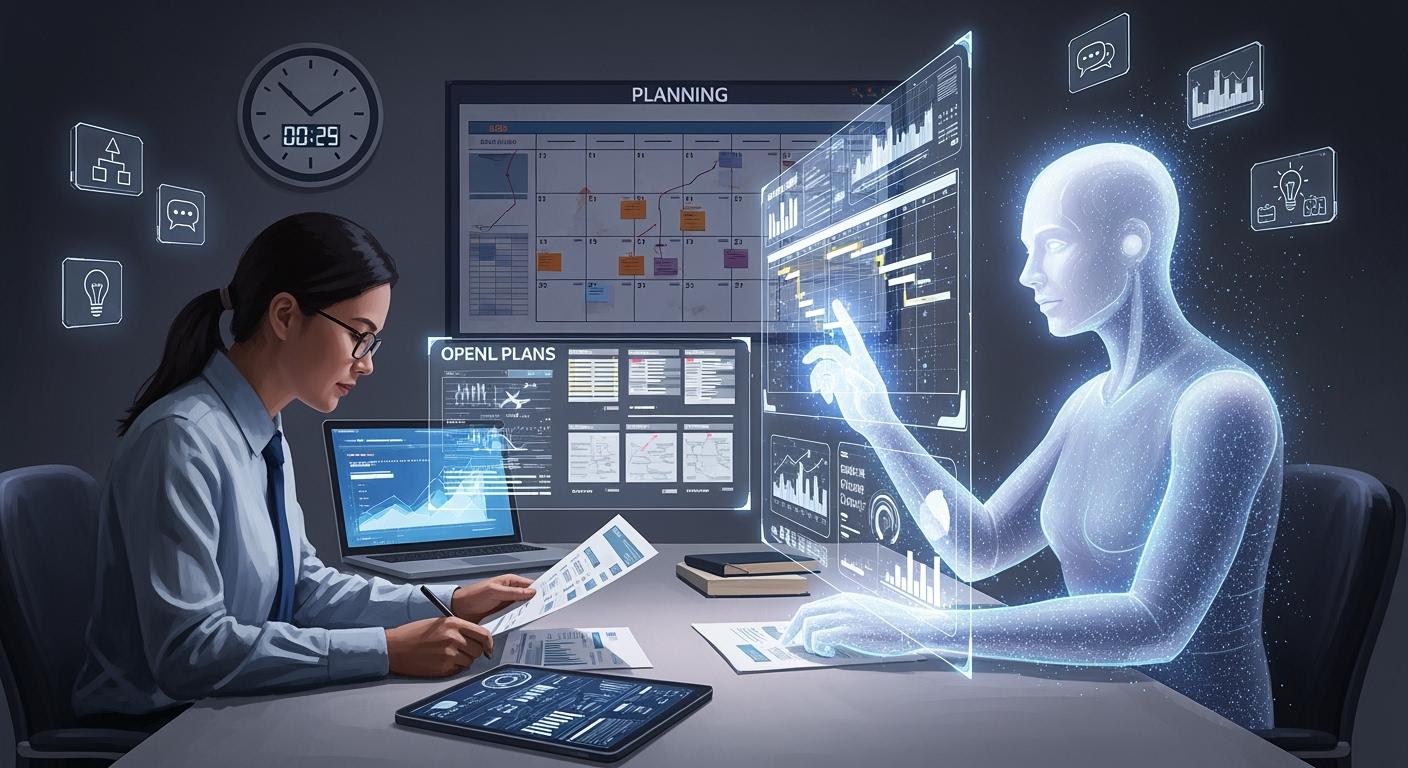
TeamOut’s AI agents can do many planning jobs, but they cannot totally take the place of human planners. These AI systems make planning team events faster and cheaper. Teams use AI to find company information right away, get ready for meetings, and try out ideas quickly. AI helps cut planning time from weeks to just minutes, and it can save up to 40% of the cost. TeamOut gives an easy way to plan events, making every step faster and clearer. AI agents change how planning works, but people still add important thinking and creativity.
Key Takeaways
AI agents make event planning much faster. They can finish tasks in minutes, not weeks. This helps save up to 40% of the cost.
Human planners are creative and understand feelings. They are important for hard choices and talking with people.
When AI and humans work together, results get better. Teams can think of new ideas. AI does the simple jobs.
AI agents get better by learning from feedback. They give better ideas and work faster over time. But, they cannot fully understand things like human planners do.
Planners need to learn about AI, how to read data, and how to understand feelings. This will help them do well with AI in the future.
What Are TeamOut’s AI Agents?
Core Functions
TeamOut’s ai agents work like digital helpers for company events. These ai agents use smart technology to help teams plan offsites, retreats, and meetings quickly and correctly. TeamOut has special features that make it different from other planning tools.
The conversational planning engine lets users say what they need in simple words. The ai agents can change plans if the team’s needs change.
Teams get instant ideas for places that fit their group size, location, and WiFi needs. Every venue comes from a checked database.
Budget and flight estimators show teams the total cost, including venue, flights, and local rides.
Teams can get special prices and deals, sometimes up to 30% less than normal prices.
Fast quote and booking steps help teams book big retreat homes easily.
These main features help teams save both time and money. The ai agents stop teams from needing long email chains and lots of manual searching.
How AI Agents Work
TeamOut’s ai agents use natural language processing to understand what users want. When a team member types a request, the ai looks at details like location, budget, and group size. The system then checks a worldwide list of over 50,000 venues. It finds places that match what the team needs.
The ai agents also get better by learning from user feedback. Each time a team plans an event, the system gives better ideas next time. The ai changes venue rankings using real team reviews and what is available now.
People who use TeamOut include HR leaders, people operations teams, and fast-growing companies. These groups often have short deadlines and tricky planning needs. TeamOut’s ai agents help with slow planning, unclear budgets, and finding good places for remote or hybrid teams.
Note: TeamOut’s ai agents are made to keep planning easy, quick, and clear for today’s teams.
AI Agents vs. Human Planners
Where AI Agents Excel
Ai agents have changed how people plan events. They are fast, accurate, and can handle many tasks at once. Teams use ai teammates to do boring jobs and look at new data right away. This helps teams make choices quickly and get more done. Ai agents do better than human planners in some ways:
They find places and figure out costs in just seconds.
Ai teammates answer questions right away, even at night.
Agents check what is available and give new ideas if there is a problem.
Ai systems help teams find and fix problems faster by cutting down on mistakes.
Ai agents can help more people during busy times, so teams do not need to hire more workers.
A study found that spiral-based ai agents finished 83.6% of planning jobs well. They were faster and more correct than old ways of planning. Ai teammates are also great at handling details. They can save money and give teams a lot more value for what they spend. Teams get much more done when they use ai agents for simple planning jobs.
Aspect | AI Agents | Human Planners |
|---|---|---|
Availability | 24/7, never misses inquiries | Limited by working hours |
Scalability | Instant scalability, handles multiple calls | Requires additional hires for scalability |
Information Delivery | Consistent and accurate | Prone to errors and inconsistencies |
Response Time | Instant responses | May involve hold times |
Training Time | Quick setup and integration | Requires weeks to months of training |
Handling Unusual Requests | Struggles with highly unusual requests | Can handle unexpected situations effectively |
Tip: Ai teammates can quickly give new choices if a flight is canceled. This helps teams make decisions faster and keeps plans moving.
Human Strengths in Planning
Human planners are good at things ai agents cannot do. They use their own thinking and past experience to make hard choices. Ai teammates follow rules, but humans understand feelings and what clients like.
Human planners ask smart questions and think about what is best.
They can talk to others and lead teams, which agents cannot do.
Planners can work with missing or confusing information and help teams know what to do.
Humans make sure things go well and take responsibility for the results.
People use feelings and creativity to build trust and fix problems that ai cannot solve.
Aspect | AI Systems | Human Concierges |
|---|---|---|
Speed | Instantly generates alternatives | Takes longer to assess and respond |
Decision-Making | Operates on structured data and rules | Uses lived experience and intuition |
Handling Nuance | Lacks ability to interpret emotional cues | Can read between the lines of customer communication |
Authority | Cannot waive fees or override policies | Can advocate for customers effectively |
Trust Building | May appear indifferent in high-stakes moments | Builds trust through personal interaction |
Note: Machines cannot replace human creativity and feelings. Planners remember past events and stand up for clients, especially when things are tough.
Ai agents make things easier and faster for customers. But only humans can show care and make good choices when things are not clear. Ai teammates often learn from Western data, so they might not understand all cultures. Human planners know about different cultures and can change plans to fit each client. This makes every event feel special and right for everyone.
Benefits and Drawbacks of AI Agents
Speed and Cost Savings
AI agents have made planning events much faster. Teams now finish jobs in just a few minutes. Before, these tasks took weeks to do. AI teammates look for places, check prices, and give choices right away. This quick work helps companies change plans fast. Many people say using these agents saves up to 40% of costs. Teams do not have to wait for quotes or spend hours searching. AI teammates also stop companies from needing more workers during busy times. This change helps teams get more done and lets them focus on creative ideas.
Limitations and Risks
AI agents help a lot, but they also have problems. Teams sometimes find it hard to use these systems for events. Some common problems are:
Over-Optimization can make plans too strict.
It can be hard to connect with other company tools.
Team members may not know how to use AI.
Some people do not like new technology.
Some managers do not change their style for digital tools.
People might use AI too much or in the wrong way.
Workers may lose skills or trust AI too much.
People may lose social or moral skills.
Agents could be used for things they should not do.
Skills learned with AI may not help humans.
Teams may trust AI less over time.
Users may look for too much information.
Automated tips can change how people see things.
These problems show that AI teammates cannot fix everything. Teams need both automation and people to keep work going well.
User Feedback and Case Studies
Many companies talk about how they use AI agents. One HR manager said,
"We planned our team retreat in three minutes. The AI teammates gave us five places and a full budget right away."
Someone at a fast-growing startup said,
"Using AI agents helped us save 30% on costs. We do not worry about replacing workers for easy planning jobs."
A remote tech company showed that AI teammates did all the basic planning. The team only checked things at the end. This saved time and helped them get more done. Users often say agents make planning easier and clearer.
Company Type | Result with AI Teammates | Human Involvement |
|---|---|---|
Remote Tech Startup | 3x faster event planning | Final approval only |
HR Team (Mid-size) | 30% cost savings | Creative input needed |
Global Enterprise | 24/7 support, no missed requests | Oversight required |
These stories show that AI agents help teams work better. But it is not always best to replace workers with AI.
Human-AI Collaboration in Planning

Best Use Cases
Teams get the most out of planning when humans and ai agents work together. This teamwork helps many industries do better. The table below shows where this mix works best:
Scenario/Field | Description |
|---|---|
Healthcare | AI helps doctors spot risks, so patients get care faster. |
Mental Health Support | AI makes peer support better and more caring. |
Creative Industries | AI gives new ideas, but artists still add their own style. |
For event planning, ai agents do jobs like finding places, checking prices, and sending reminders. Human planners add creative ideas and personal touches. TeamOut’s agents work best for these jobs:
Use Case Description | Target Audience |
|---|---|
Automating meeting booking | Solo founders |
Running complex planning sequences | Enterprise operations |
Building repeatable delivery pipelines | Small agencies |
Sales teams | |
Monitoring engagement and sending alerts | Customer Success Managers |
Teams using both humans and ai agents often get more done and have smoother work.
Enhancing Outcomes Together
Companies set up teams to use both human planners and ai agents well. Many now spend more on ai, and 71% plan to grow this spending for teamwork. By 2027, most companies will use some kind of human-ai team.
Human planners use ai to check weather and pick the best places.
Agents give fast, custom tips, and humans make them fit each event.
Real-time agent help lets teams decide quickly and change plans fast.
A modular setup lets teams change how they plan. Ai agents do simple jobs, and humans handle creative or tricky tasks. This mix can raise revenue by 25% and cut costs by 30% for many. Teams with flexible setups also get 20% more done and spend less.
When humans and ai agents team up, planning is faster, cheaper, and gives better results.
The Future of Planning Roles
Adapting to AI Agents
Autonomous agents and generative ai are changing event planning. Human planners now work with agentic systems. These systems do routine jobs and look at lots of data. Planning is moving from slow steps to fast, smart agents. These agents can change plans quickly.
Some big changes in planning roles are:
Teams use ai to guess what skills they will need.
More people can help make choices, so decisions are more open.
Human planners watch over things and help guide agentic systems.
Generative ai helps planners break down hard goals and change plans.
Planners can get ready by doing these things:
Look at how work is done now and see where automation can help.
Try hybrid models, letting ai do easy jobs while humans decide at the end.
Use more autonomous agents and set up ways to get feedback and improve.
Planners who use generative ai and automation will help teams move faster and be more flexible.
Evolving Skills for Planners
Generative ai and autonomous agents are now used more often. This means planners need new skills. Planners must learn to use ai tools to work better and make events feel special. They also need to help guests in new ways, like using generative ai for quick captions or transcripts.
The most important skills for planners working with ai are:
Skill | Description |
|---|---|
Knowing what ai can do and how it changes the business. | |
Tool fluency | Learning to use ai in daily work and on different platforms. |
Data interpretation | Reading ai results, finding useful info, and seeing patterns. |
Decision-making | Mixing ai ideas with human thinking to make good choices. |
Ethical discernment | Knowing when humans should decide instead of algorithms. |
Prompt Engineering | Telling autonomous agents what to do and setting rules without coding. |
Strategic Thinking | Using human judgment to make plans and choose market positions. |
Complex Problem-Solving | Using creativity and judgment to solve tough problems. |
Emotional Intelligence | Handling client relationships and team feelings. |
System Thinking | Seeing how agentic systems fit into the business and help it grow. |
Planners who learn these skills will do well when generative ai and autonomous agents work with humans.
TeamOut’s ai agents help teams work much faster. But human planners are still needed for hard and creative event jobs. The best teams use both ai and people to make sure events are high quality and feel special.
Human planners use empathy and intuition to make smart choices.
AI does boring jobs and gives useful information.
Working together helps teams create great events and get more done.
As ai gets better, planners should learn skills that work well with automation. Using new tools and keeping human control will help companies do even better.
FAQ
What makes TeamOut’s personal ai agents different from other ai-powered tools?
TeamOut’s personal ai agents use goal-directed autonomy to plan events. They can change plans fast if something changes. These agents help teams save time and get better results. The system uses agentic technologies to give quick ideas and cost guesses.
How does agent autonomy improve automated workflows in event planning?
Agent autonomy lets task-executing agents do simple steps alone. They check venue choices and send updates without help. This gives planners more time for creative choices and helping clients.
Can empowering ai support human-machine partnership in business settings?
Empowering ai makes the human-machine team stronger. It helps teams work faster and smarter together. Ai in business makes planning easier for everyone. Planners use integration features to mix agentic technologies with their own skills.
What role does integration play in using ai in business for team events?
Integration links TeamOut’s ai-powered tools with other business systems. Planners use these links to share data and watch progress. This setup helps teams run events smoothly and use agentic technologies for better results.
How do agentic technologies help with decision-making for human teams?
Agentic technologies help teams decide by giving clear choices and fast feedback. Planners use these tools to compare venues, costs, and schedules. Ai-powered tools help teams make smart choices and reach goals fast.
See Also
Exploring The Functionality Of AI Agents In Depth
Comparing AI Agents With Conventional Language Instructors
Creating An Instant English Learning Process With AI Tools
Establishing A Seamless Daily English Improvement Cycle With AI

© Copyright 2025 LinkstartAI - All Rights Reserved.