AI that controls real apps across web, desktop, and mobile


You can now use an AI that controls real apps on the web, desktop, and mobile. You just need to say what you want. Tools like Caesr let you tell your device what to do in plain language. You do not need to know code or scripts. This new way uses AI that controls tasks on different app platforms. The market for AI app builder tools is getting bigger. More people see how AI can change how they use applications.
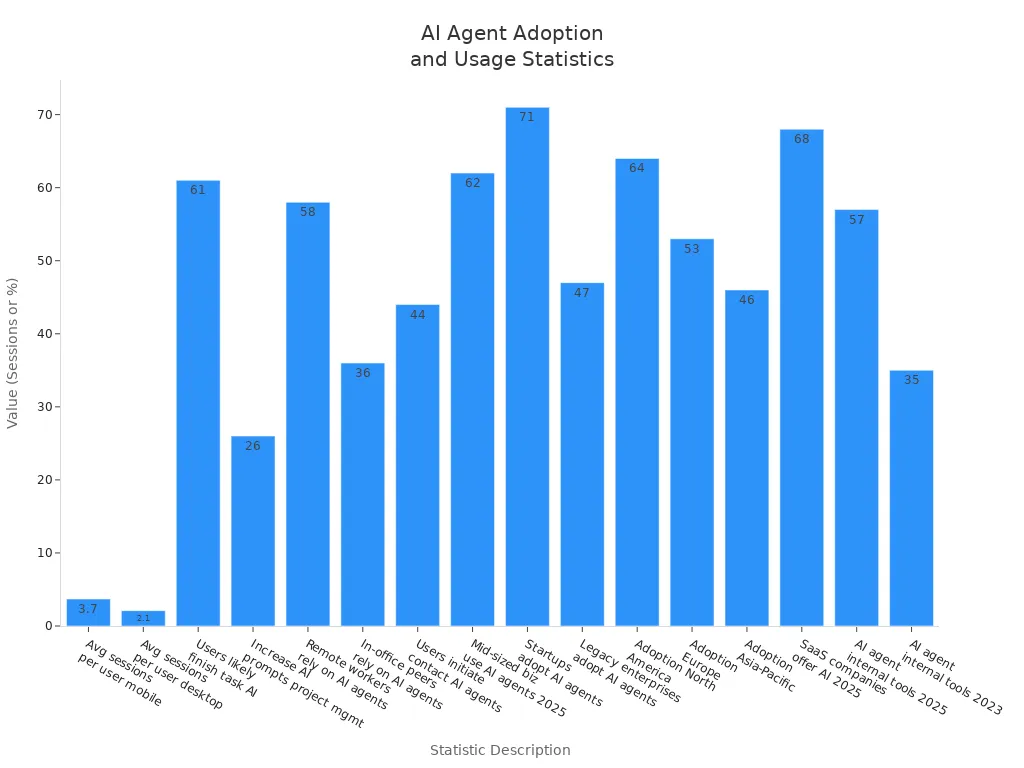
Statistic Description | Value |
|---|---|
3.7 | |
Average sessions per user on desktop | 2.1 |
Users likely to finish a task with AI suggestions | 61% |
Remote workers relying on AI agents | 58% |
Startups adopting AI agents | 71% |
AI agent adoption in North America | 64% |
You see more apps using AI for automation every day. Many people now use AI that controls their tasks to finish them faster. AI also makes applications easier to use.
Key Takeaways
AI app builders like Caesr let you control apps with simple words. You can make tasks happen without writing code.
AI helps you get more done by doing boring tasks for you. This saves you time and lets you do more important things.
Mobile, desktop, and web apps are all different for AI to control. Knowing this helps you pick the best tools for what you need.
No-code solutions let anyone make apps fast. You can build and change apps without needing tech skills.
Always look at privacy settings when you use AI app builders. Keeping your data safe is very important while you use automation.
AI that controls: What Does It Mean?
Defining AI Control
When people talk about "AI that controls" real apps, they mean a new way to use technology. You do not need to write code or use hard scripts. You just tell the AI what you want, and it does it for you. You can ask an AI agent to open an app, click a button, type something, or fill out a form. The AI listens to your instructions and does them on web, desktop, and mobile.
AI app builder tools like Caesr help make this happen. You can use simple words to explain your task. The AI then controls the app for you. This changes how you use technology. You do not have to worry about APIs or integrations. The AI works with the app’s screen, just like you do.
Prompt-driven AI gives you more freedom than old automation. You do not need to spend hours coding. You can make solutions by saying what you want. This makes it easy for anyone to automate tasks, even if you do not know much about tech.
With AI that controls, you become a director, not just a user. You tell the AI what to do, and it takes care of the details.
Scope and Limitations
AI that controls real apps has many good points, but it also has limits. These AI tools let you automate tasks in many apps. You can use them for work, school, or daily life. But there are some problems you might face:
It depends on good data and if data is there.
It does not have common sense or deep understanding.
It cannot handle unclear instructions.
There are privacy and ethical worries.
It cannot always adapt or work in every case.
It needs computer power and resources.
It does not have feelings or emotional smarts.
There are rules and laws to think about.
It can be used in the wrong way. 10. There are risks in the long run.
You should know these things when you use AI app builders. The tech is strong, but not perfect. Sometimes the AI has trouble with unclear tasks or strange app designs. Still, the good things often beat the bad, especially for people who do not code.
Examples of AI in Action
You can see many examples of AI that controls real apps today. Caesr is a top AI app builder tool. It lets you automate tasks on any device with just a prompt. You can use it to test software, get data from websites, fill out forms, or handle support tickets. You do not need to set up connections or write scripts.
Other AI agents also show strong skills. Here are some examples:
AI Agent | Description |
|---|---|
Notion AI | Gives an AI Q&A feature to help users find info in Notion pages. |
Humaans AI | Acts as an AI helper to assist users in the product. |
Zoom AI Companion | Makes user experience better by answering questions using company data. |
Otter AI Chat | Helps users talk and find information. |
You can see how these AI app builders work in different apps. They help you get answers, manage data, and automate your work.
Prompt-driven AI is different from old code-based automation. You do not need to write scripts or set up hard systems. You can build workflows fast and try new ideas. Visual workflow builders let you connect AI steps, like checking emails or making reports. You can change your process if you get feedback. This makes AI that controls more flexible and easier to grow than old ways.
Prompt-driven AI lets you be creative. You focus on ideas, not code.
Old automation takes more time and work. You get more control, but it is harder to change.
People who do not code can build and test workflows fast. Engineers can make them better for big teams.
AI that controls real apps is changing how you use technology. You can automate tasks, save time, and focus on what matters most.
AI Control Methods Across Platforms

AI can now control real apps on web, desktop, and mobile. You can use these tools to automate tasks in many places. Each platform has its own way of working and its own challenges. You need to know how AI works with each type of app to get the best results.
Web App Automation
You use web apps every day. These apps run in your browser. AI can control web apps by clicking buttons, typing in fields, and moving through pages. You do not need to write code. You just tell the AI what you want, and it does the work.
AI agents for web applications use the screen, just like you do. They can fill out forms, collect data, or even test websites. You can use tools like Caesr to automate web tasks with a simple prompt. This makes it easy to handle repetitive jobs.
Web app automation works well because web pages follow set rules. The AI can find buttons and links by looking at the page. You get fast results and can change your workflow quickly. You do not need to worry about updates or changes, because the AI adapts.
Tip: If you want to automate a web app, start by describing your task in clear steps. The AI will follow your instructions and finish the job.
Desktop App Automation
Desktop apps run on your computer. These apps can be harder for AI to control. The screens are bigger, and there are more buttons and menus. You might use desktop apps for work, design, or games.
AI agents need good data to control desktop apps well. They must learn how people use the app. Sometimes, user actions are complex. You might click, drag, or use keyboard shortcuts. The AI must understand all these actions.
You can see some challenges when you use AI for desktop app automation:
AI needs high-quality training data to work well.
Complex user actions make automation harder.
You need human oversight to check the AI’s work.
You can solve these problems in a few ways:
Use human-in-the-loop systems to guide the AI.
Break big tasks into smaller steps for the AI.
Try advanced AI models that can handle many tasks.
Desktop AI agents use more screen space than mobile. You get more details and better results. You can see more information and control more parts of the app. This helps you finish tasks faster and with fewer mistakes.
Mobile App Automation
Mobile apps are everywhere. You use them on your phone or tablet. AI can control mobile apps, but it faces special challenges. Mobile devices have small screens and less power. You need to think about battery life and speed.
AI agents for mobile app automation must work with many devices. Phones and tablets come in different sizes and use different systems. You might use Android or iOS. The AI must adapt to each one.
Here is a table that shows the main challenges for mobile app automation:
Challenge | Description |
|---|---|
Resource Constraints | Mobile devices have limited computational power, leading to battery drain and performance issues. |
Data Privacy and Security | Continuous access to sensitive data raises risks of unauthorized access and compliance challenges. |
Heterogeneity of Mobile Platforms | Variations in device models and OS versions complicate the development of agentic AI functionalities. |
Latency Issues | Server-side inference can introduce unacceptable delays for real-time interactions. |
Trust and Explainability | Users require transparency in agent behaviors to build trust, which is challenging on small screens. |
You can use AI to automate mobile app tasks like testing, filling forms, or collecting data. Tools like Caesr let you do this with a prompt. You do not need to set up anything special. The AI works across all your devices.
Mobile app automation is growing fast. People use their phones for shopping, work, and fun. Studies show that ecommerce queries often use mobile AI agents. You can get more done on your phone with AI control.
Note: If you want to automate a mobile app, make sure your instructions are clear. The AI will follow your steps and help you save time.
You can see that AI works differently on web, desktop, and mobile. Each platform has its own strengths and challenges. You can pick the best tool for your needs and let AI handle the rest.
AI App Builders and Generative AI Technologies
AI App Builder Overview
You can use an ai app builder to make real apps. You do not need to write code. These tools help you build apps for web, desktop, and mobile. You just say what you want, and the ai does it. This is called building with a single prompt. Caesr, MindStudio, Bubble, Appsmith, Softr, and WeWeb are popular ai app builders. Each one has different ai features for creating and editing with ai. You can use these platforms to automate tasks, manage data, and connect with other apps.
Here is a table that shows some top ai app builder platforms and their main features:
Platform | Key Features | Pros | Cons |
|---|---|---|---|
Knack | Easy no-code platform, smart data management | Fast app building, scalable | May need help for hard features |
Softr | Changes data sources, ai-powered blocks | Simple for non-technical users | Not great for native mobile apps |
Adalo | Drag-and-drop design, ai integrations | Good for mobile apps and MVPs | Data limits in lower plans |
Glide | Google Sheets apps, ai-driven suggestions | Quick, easy app building | Not for big apps |
AWS App Studio | Generative ai app builder, visual tools | Safe, scalable, flexible pricing | Needs AWS knowledge |
AppSteer | Low-code/no-code, ai for process automation | Enterprise-grade apps, templates | Higher cost, learning curve |
AppyPie | No-code for mobile apps, chatbots | Good for small businesses | Limited for complex apps |
Generative AI App Builder Tools
Generative ai app builder tools change how you make apps. You can use prompts to make new apps fast. These tools use ai features to help you create and edit with ai. You do not need to know how to code. You can use ai-powered interface parts and add them to your workflow. Caesr lets you automate anything on any device. MindStudio, Bubble, and WeWeb also give strong ai integration for building big apps. You can use these tools for building with an ai agent and get help with every step.
Tip: Try creating and editing with ai to see how easy it is to build custom apps for your needs.
Integration and No-Code Solutions
No-code app builders and ai app builders make things easier for everyone. You do not need special skills to use a no-code platform. You can build ai-powered apps and automate workflows in days, not months. These tools let you use ai integration for connecting apps and data. Softr and WeWeb give you different levels of ai features. Softr is good for fast app generation and basic ai integration. WeWeb offers advanced ai features and high context awareness for building big apps.
No-code platforms help you make ai-powered solutions quickly.
You can use ai-assisted app building for custom apps.
You can control your apps with ai, even if you do not know code.
No-code solutions make creating and editing with ai simple. You can use ai app builders for building with an ai agent and get results fast.
Real-World Use Cases and Benefits

Productivity and Workflow Automation
You can use ai to get more done on web, desktop, and mobile. Many people who use ai app builders like Caesr save a lot of time. Some developers say they finish coding 26% faster with ai tools. A study by Microsoft and Accenture showed developers finished 26% more tasks and made 13.5% more code changes. JPMorgan Chase saw their teams work 10-20% better after using ai coding assistants. Most developers save 2-3 hours each week on simple jobs. You can let ai do boring work in web and mobile apps, so your day is easier.
Ai can fill out forms, collect data, or run tests for you. This lets you spend more time on important things.
Accessibility and User Assistance
Ai helps make apps easier for everyone to use. If you have a disability, ai can help you use web and mobile apps. For example, XRHealth uses ai to change exercise levels as you go, so patients stay interested. Avaz is an app that uses ai to guess what you want to say, which helps people who cannot talk. Be My AI gives blind and low-vision users picture descriptions, so they can shop or handle medicine. Many people feel more free and sure of themselves when they use these ai apps.
Testing and Quality Assurance
You can use ai agents to test software on web and mobile apps. Ai can make test plans, run tests, and check the results. This means software comes out faster and works better. Ai learns from old tests, so it gets smarter over time. Companies that use ai for testing spend less money and get better results. Some groups need 60-80% fewer QA workers and spend 40-60% less on test tools. Ai testing also makes users happier and keeps them coming back.
Role of AI Agents in Testing | Measurable Outcomes |
|---|---|
Make new test plans | Lower testing costs |
Run tests by itself | Faster software releases |
Check results and improve testing | Better product quality |
Learn from old tests | More reliable tests |
Efficiency, Security, and Privacy
Ai app builders help you work faster and smarter on web and mobile. You can let ai do jobs in different apps without writing any code. Tools like Protecto and Robust Intelligence add privacy tools, like hiding data and finding weak spots. These tools help keep your info safe. Sometimes ai agents collect private data, so you should pick apps with strong privacy rules. Many ai app builders now have privacy checks and ways to control your data. You can use ai to save time and still keep your info safe.
Tip: Always look at the privacy settings in your ai app to keep your data safe.
Getting Started with AI App Builders
Step-by-Step Guide
You can start building with an ai app builder even if you have never coded before. Here is a simple guide to help you begin:
Describe What You Want to Build
Write down your idea in plain English. Tell the ai what kind of app you need and what it should do.Let the AI Generate the Interface and Data Models
The ai will create the screens and set up the data for your app. You do not need to worry about tables or connections.Customize With Point-and-Click Tools
Use the app builder’s drag-and-drop features to change fields, layouts, and colors. You can make your app look the way you want.Launch and Iterate Fast
Share your app with friends or a small group. Ask for feedback and use the ai to make quick changes.
Tip: Start with a small project. You will learn faster and see results right away.
Many new users face challenges like publishing to app stores, keeping users engaged, or connecting with other tools. You can solve these problems by choosing a trusted ai app builder. These platforms often have guides and plugins to help you add features and connect with other systems.
Resources for Beginners
You can find many resources to help you learn about ai app builders. Here are some popular platforms and what they offer:
Adalo: Lets you create mobile and web apps with simple tools.
Bubble: Good for building web apps with many features.
Softr: Great for beginners who want to make simple web apps.
Glide: Works well for bigger mobile and web apps.
Backendless: Helps semi-technical users build larger apps.
Bravo Studio: Perfect for designers who want to create mobile apps.
Xano: Offers more options for users with IT skills.
Betty Blocks: Used for making business-level no-code apps.
VoiceFlow: Lets you build ai-powered apps and chatbots.
Note: Set clear goals for your ai project. This helps you measure success and stay on track.
You can join online forums, watch video tutorials, or read guides from these platforms. Many communities welcome beginners and answer questions. You will find that building your first ai app is easier than you think.
You can see ai changing how people use apps. Many companies use ai app builders for work tasks. They use ai to help with HR, check quality, and report money. You can see how ai saves money and time. It also helps customers feel happier.
Use Case | Impact |
|---|---|
HR Processes | Automates hiring and onboarding |
Quality Assurance | Improves efficiency and reduces time to market |
Supply Chain Management | Cuts costs by up to 43% |
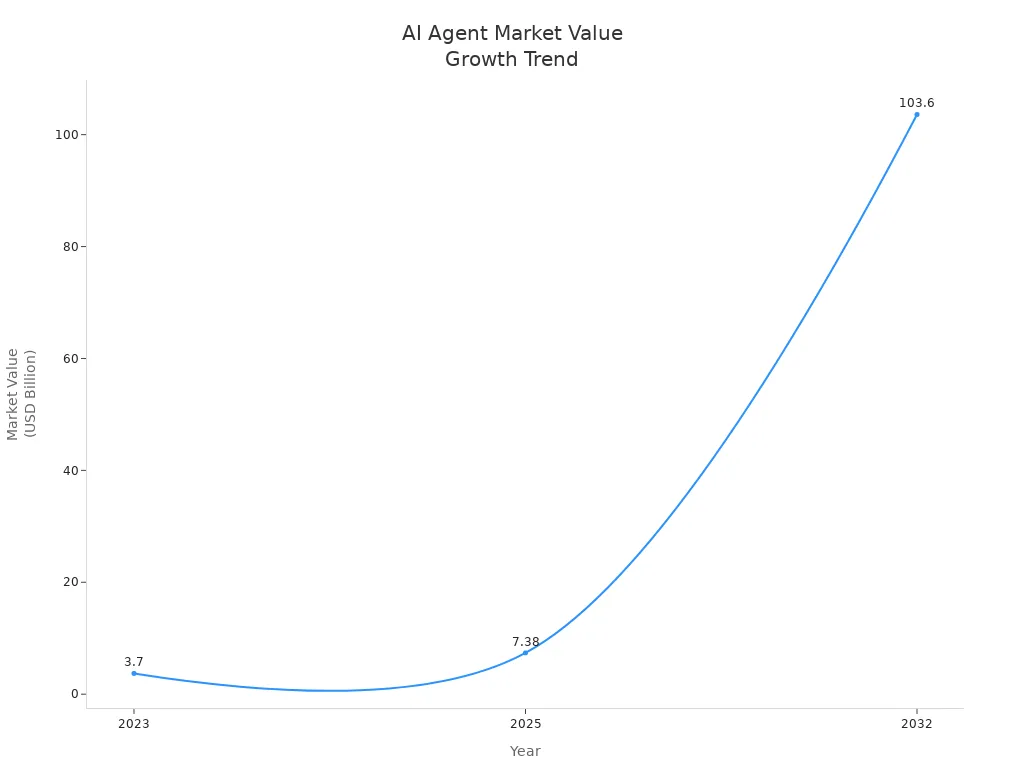
Prompt-driven ai agents help you do jobs faster in any app. You can try new ai tools and tell others what you learn. This helps more people understand how to use ai.
FAQ
What is an AI app builder?
You use an AI app builder to create apps without writing code. You give instructions in plain language. The AI understands your needs and builds the app for you. This makes building apps easy for everyone.
How does AI control real apps?
You give a prompt to the AI. The AI reads your instructions and takes action inside the app. It can click, type, and move through screens. You do not need to set up special tools. The AI works with any app.
Can I use AI to automate tasks on my phone?
Yes, you can use AI to control apps on your phone. The AI follows your steps and completes tasks in mobile apps. You do not need to install extra plugins. The AI adapts to different devices and app types.
Is my data safe when using AI app builders?
Most AI app builders use strong privacy tools. You can check the privacy settings in your app. The AI does not share your data without your permission. Always read the app’s privacy policy before you start.
What are some common uses for AI in apps?
You can use AI to fill forms, test software, collect data, or help with support tickets. The AI can work in web, desktop, and mobile apps. Many people use AI to save time and make their app experience better.
See Also
Best AI-Driven Learning Applications for Personal Growth in 2025
Jule: The AI Tool Simplifying Software Development Processes
AI Translation Solutions for Calls, Events, and Streaming

© Copyright 2025 LinkstartAI - All Rights Reserved.