AI music cost saving and the revolution in non-singer music production costs

You do not need a fancy studio or pricey gear to make music now. AI music cost saving helps you make great tracks, even if you cannot sing. New tools let you do composition, mixing, and mastering very fast. These changes let anyone with a tune in their head make music. Virtual singers and AI-powered software remove old limits. Now, making music is easier for everyone.
Key Takeaways
AI tools help people make music for less money and make it easy for everyone. - You can make good music without paying for big studios or fancy gear. - AI lets people who do not sing make songs by making voices that sound real. - Automation makes making music faster, so you use less time and work. - AI lets more people make music and show their art to others.
AI Music Cost Saving for Non-Singers
Cost Reduction Through AI Tools
You can save a lot of money when you use AI tools for music production. In the past, you needed to hire session musicians, rent studio space, and pay for expensive software. Now, you can do most of this work on your computer. Many AI music tools offer free versions or low-cost plans. For example, some platforms start at $12.49 per month, which gives you predictable costs. You do not have to worry about paying for studio time or hiring singers.
Here is a table that shows how these tools help you save money:
Cost-Saving Feature | Description |
|---|---|
Reduced dependence on session musicians | You do not need to hire musicians or rent studio space. This lowers your production costs. |
Faster background music production | You can create background tracks instantly. This saves you time and money. |
Lower licensing costs | You often pay less for music rights. This makes your project more affordable. |
Quick idea development | You can try out new ideas quickly. This helps you improve your music faster. |
Support for non-musicians | You can make music even if you do not have formal training. |
AI music cost saving happens because you do not need to pay for things like studio fees or vocalist payments. Traditional methods cost more because you have to pay for many services. With AI, you can make changes quickly and try new ideas without extra costs. This flexibility helps you finish your music faster and with less money.
Automation and Efficiency Gains
AI tools do not just save you money. They also make your work easier and faster. You can turn a simple vocal idea into a full song with just a few clicks. You do not need to learn complex mixing skills. AI mixing tools can add professional effects and balance your tracks automatically.
Here are some ways AI-driven automation helps you:
You can transform simple vocal inputs into complex instrumental tracks. This means you can create music even if you cannot sing.
AI mixing tools apply professional processing for you. You do not need to spend hours learning how to mix.
You can skip the long learning curve. This lets you focus on your creative ideas instead of technical details.
AI music cost saving also means you spend less time on each project. You can finish songs faster and move on to new ideas. This speed and efficiency open the door for more people to create and share their music.
Traditional Barriers in Music Production
High Costs for Independent Creators
You may dream of making music, but traditional production costs can stop you before you start. Many independent creators face high expenses at every step. You need to pay for studio time, hire producers, and bring in session musicians. Each role adds to your total cost. The table below shows what you might pay for each part of the process:
Role | Typical Rate Range |
|---|---|
Studio Time | $50 – $300/hour, $1,000+/day |
Music Producer | $25 – $2,000+/hour |
Session Musicians | $200 – $2,000+/session |
Mixing Engineer | $200 – $1,000/song |
Mastering Engineer | $100 – $500/project |
You also need to think about the size of your project. A single demo can cost a few hundred dollars. A full album can reach $100,000 or more. Here is a table that breaks down the typical costs for different project scopes:
Project Scope | Typical Cost Range |
|---|---|
Single/Demo | $100 – $500 |
Single Song Production | $500 – $5,000 |
EP (3-5 songs) | $3,000 – $15,000 |
Full-Length Album (10-12 songs) | $10,000 – $100,000+ |
Film/TV Score | $10,000 – $250,000+ |
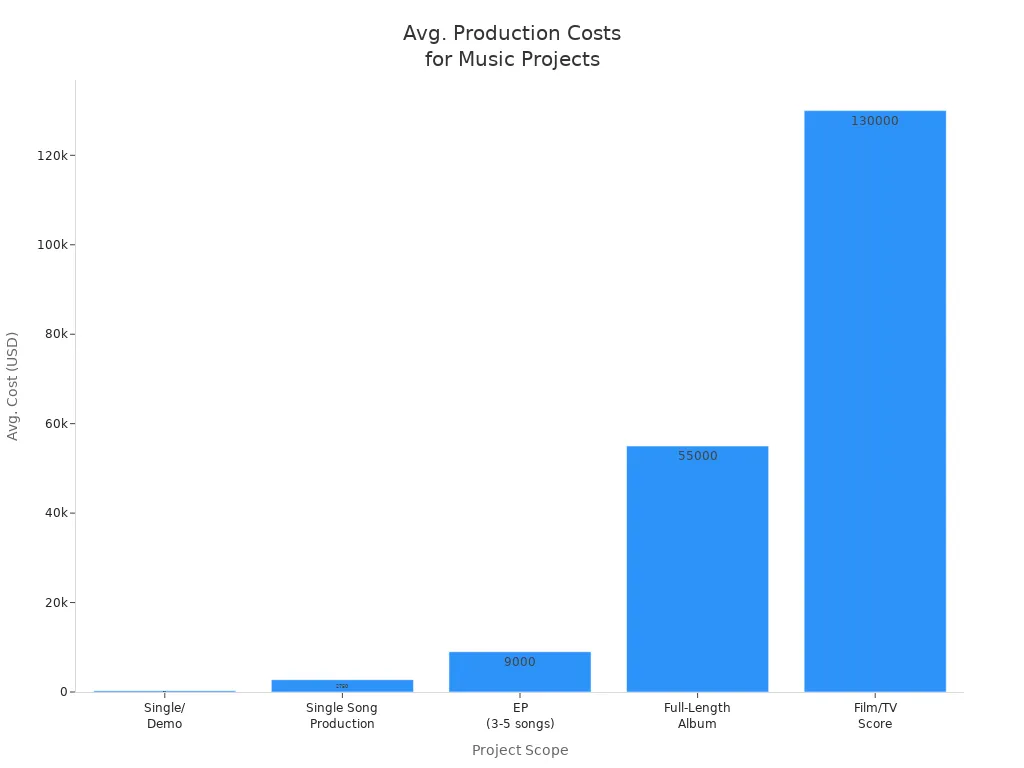
You can see that costs add up quickly. Many creators cannot afford these prices. High costs often keep you from sharing your music with the world.
Challenges for Non-Singers
If you have a great melody in your mind but cannot sing, you face another barrier. You may need to hire a professional singer. This adds more cost and makes the process harder. You might not have access to good recording equipment. You may also feel shy about your voice. These challenges can stop you from turning your ideas into real songs.
Many talented people give up because they think only trained singers can release music. Traditional music production often leaves non-singers behind. You need both money and vocal skills to succeed. This old way of making music creates a ceiling that is hard to break.
AI Tools for Non-Singers
Virtual Singer Workflow
You can make music even if you cannot sing. You also do not need a fancy studio. AI-powered tools help you do this with easy steps. Here is how you use a "virtual singer" to turn your ideas into songs:
Step | Description |
|---|---|
1. Reference Singer Selection | Pick a singer from YouTube who matches your style. You only need a short 20-second clip. |
2. Audio Upload & Model Training | Upload 5-10 short clips to an AI platform like ACE. The system makes a custom vocal model in about 30 minutes. |
3. Melody & Lyrics Input | Put your melody in with MIDI and type your lyrics into the software. |
4. Vocal Generation & Fine-Tuning | Use the model to make vocals. Change how words sound and add feeling for the best result. |
5. DAW Mixing | Move the AI vocals into your Digital Audio Workstation (DAW) and mix your song. |
Tip: You do not need fancy microphones or a special room. You can do all these steps at home with just a computer.
AI music tools like Yamaha’s Vocaloid 6 and Dreamtonics’ Synthesizer V let you type in lyrics and melodies to make singing voices that sound real. You can also use plugins like SoundID VoiceAI to change simple singing into different voices. Some platforms, like Voicify and ElevenLabs, help you make vocals for covers or voiceovers.
You can tell these virtual singers what to do, just like real musicians. This means you can pick how the singing sounds and feels. AI-powered musicians can act like real artists, so your music sounds special and professional.
With this way of making music, you can:
Make songs at home, even if you do not have recording gear.
Work with people online and share files easily.
Record each part by itself, then put them together in your DAW.
This process removes old problems. You do not need to hire singers or rent a studio. You can focus on your melody and lyrics, and let AI do the rest.
Voice Cloning and Custom Models
Voice cloning has changed how non-singers make music. Now you can make a special vocal model that sounds like you or any singer you pick. AI uses smart machine learning to copy how people sing and show feelings.
New AI voice cloning uses deep learning and special math to make voices sound real and full of emotion. These tools can make AI-sung vocals for your songs. You can also use them for audiobooks, podcasts, video voiceovers, and game characters.
Here are some ways voice cloning and custom models help you:
You can keep your songs sounding the same every time.
You can make your own "virtual self" sing your music.
You can quickly make voiceovers for videos or games, which saves time and money.
You can try out different singing styles before picking the best one for your song.
Many people now use AI to put out music without ever going to a studio. You can break the wall that stopped non-singers from sharing their work.
AI voice cloning lets you be creative. You do not have to worry about singing well or having a good place to record. You can try new sounds and styles, knowing AI will help you make your ideas real.
Real-World Impact and Case Studies
Cost Savings Examples
You can see how AI music cost saving changes the music world. Many creators now spend much less to make songs. In the past, making an album could cost up to $250,000. Today, you can finish a full album for as little as $5,000. This huge drop in cost lets more people share their music.
Here are some ways AI helps save money:
You do not need to pay for studio time or hire singers.
You can use AI to create music at home with your computer.
Many platforms offer low monthly fees, so you know what you will spend.
About 68% of creators now choose AI tools because they save money and time.
Streaming platforms also see big savings. For example, Spotify paid nine billion dollars in royalties in 2023. AI music production could help these platforms lower or even remove these payments.
Success Stories from Non-Singers
Many non-singers now release music with AI tools. You can find independent artists who use virtual singers to bring their ideas to life. Some creators use voice cloning to make a "virtual self" that sings their songs. Others use AI to make music for ads, games, or films.
Here are some real-world examples:
A songwriter with no singing skills used AI to create a full album. They spent less than $5,000 and released it online.
A small game studio made all their background music with AI. They finished the project faster and saved thousands of dollars.
Many artists now use AI to test different singing styles before picking the best one for their tracks.
AI music cost saving gives you the power to make music, even if you cannot sing. You can focus on your ideas and let AI handle the rest.
Industry Transformation
Democratization of Music Creation
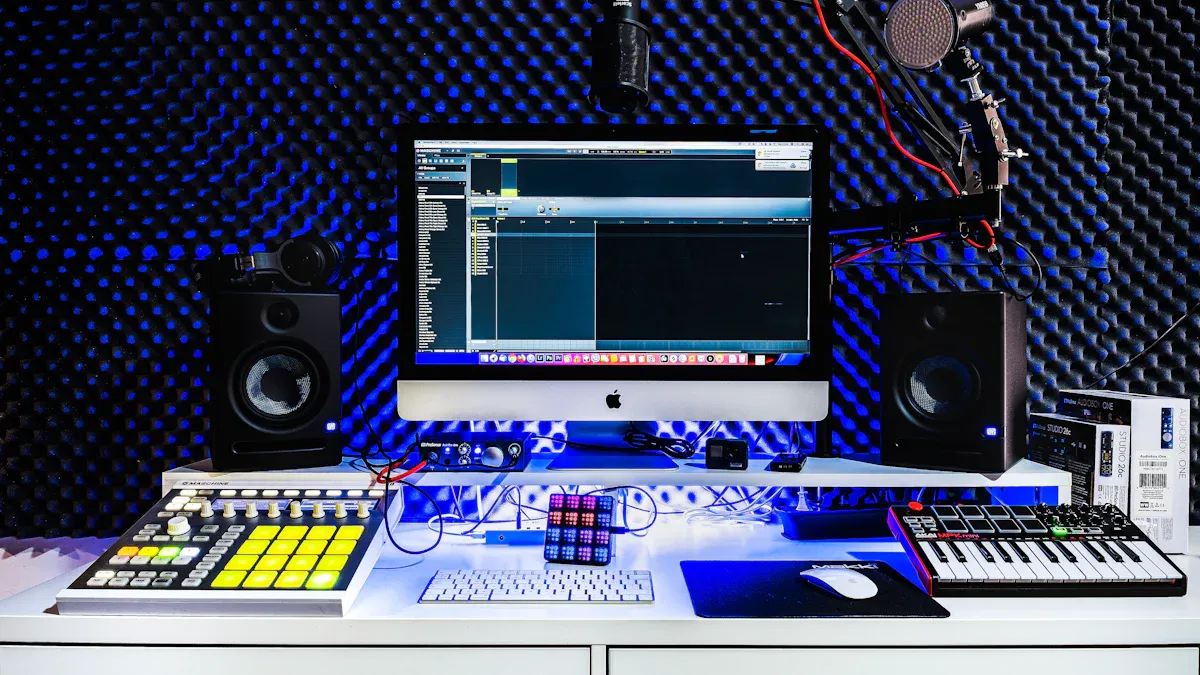
AI has changed who can make music. You do not need years of training or expensive lessons. Now, you can create songs with just a computer and your ideas. AI tools let you focus on what you do best. If you like writing lyrics, you can write. If you have a melody in your head, you can use AI to bring it to life.
AI lets you make music and beats with simple prompts. You do not need to read music or play an instrument.
You can create professional-sounding tracks even if you have never taken a music class.
AI tools help you make specific sounds or styles. You can try new ideas and see what works.
You can finish songs quickly. This means you can share more music with the world.
You can use AI to fill in the gaps in your skills. If you cannot sing, AI can sing for you. If you cannot play drums, AI can make the beat. This opens the door for many people who once felt left out of music.
New Opportunities for Creators
AI gives you new ways to make and share music. You can try things that were hard or impossible before. Many tools help you with every part of the process.
You can use AI to compose melodies and chord progressions. This helps you start a song even if you do not play an instrument.
AI can generate drum patterns and beats. You can pick the style you want.
Auto-mixing and mastering tools make your music sound polished. You do not need to hire a sound engineer.
AI can check your timing and harmony. It can suggest ways to improve your song.
Some tools even suggest new sounds based on your track. You can explore different genres and moods.
You can now release music faster and reach more listeners. AI helps you turn your ideas into real songs, no matter your background. This transformation means anyone can become a music creator today.
Challenges and Considerations
Quality and Authenticity
You might ask if AI music feels as real as music made by people. Many people worry about this too. AI does not have real feelings or life stories. This makes some listeners think AI music has no soul. Even if AI music sounds good, it may not feel deep.
76% of people think AI should not use artists’ music or voices without asking.
74% say AI should not copy or act like artists unless allowed.
83% want AI-made songs to be clearly labeled.
73% think AI should list all music it used.
Music is important in culture. You need to know history and meaning to make songs that connect with people. Some people worry that AI will fill the world with bad songs. Skill and taste still matter a lot. AI can help you, but it cannot make your choices for you.
A worldwide survey showed 97% of people could not tell if a song was made by AI or a person. Most people guessed wrong. Still, 80% want AI songs to be labeled. Being honest helps you and your fans trust your music.
Copyright and Ethics
When you use AI for music, new copyright and ethics problems come up. Big music companies like Universal, Sony, and Warner are suing AI companies for copying their artists. This shows how important it is to respect who owns music and ideas.
The Copyright Office said in March 2023: “If AI decides what the music sounds like, it is not made by a person. That means it cannot be protected by copyright and must be marked in the application.”
The laws about music keep changing:
The 1909 Copyright Act made the first rules.
The 1976 Act changed how artists get paid.
The Digital Millennium Copyright Act added rules for digital music.
You need to think about getting permission, who owns the music, and if it is legal to train AI with copyrighted songs. Some companies now make deals with AI firms to use music the right way. Working together may be better than fighting. You help shape music’s future by making good choices and respecting others’ rights.
Future Trends in AI Music Production
Emerging Technologies
AI music tools will get even smarter soon. You do not need to sing to make music with AI vocalists. These tools let you try many genres and languages. You can test new sounds and styles without special lessons.
AI vocalists let you use many singing styles and languages.
You can make songs without paying singers, so you save money.
Indie artists now have more ways to share their music.
AI tools keep improving, so making music gets faster and easier.
AI platforms like Creatorry make music easy for everyone. You can make a song in less than five minutes. These tools work with over ten genres and five languages. You can use them on your phone with apps like Telegram. You also get cheap rights to use your music in videos, games, or podcasts.
Advice for Aspiring Creators
You can start making music with AI, even if you are new. Experts say AI tools help you write songs and beat creative blocks. You can make royalty-free music, which saves time and money.
Feature/Benefit | Description |
|---|---|
Accessibility | AI tools let anyone make music, from beginners to experts. |
Speed of Production | You can finish a song in just a few minutes. |
Genre and Language Diversity | You can try many genres and languages for your songs. |
Mobile Integration | Make music anywhere with mobile apps. |
Affordable Commercial Rights | Use your AI music in any project without legal problems. |
You can use LANDR to master your songs or Vocal Remover to take out vocals. These tools help you learn and get better at music. AI can also help you market your songs by showing what fans like. Always check copyright rules to keep your music safe. Keep learning about new AI tools and try new ways to make music. This helps you grow as a creator and share your songs with others.
You now have more ways to create music, even if you cannot sing. AI music cost saving lets you work faster and try new ideas.
You can use tools that help you make high-quality songs at home.
These tools break down old barriers and give you more creative freedom.
Experts say you should balance easy access with respect for quality and ethics. Stay curious about new AI workflows and watch how the music industry changes.
FAQ
How can you make music if you cannot sing?
You can use AI virtual singers. Upload your melody and lyrics. The AI creates vocals for your song. You do not need to record your own voice.
What equipment do you need for AI music production?
You only need a computer and internet access. Most AI music tools work online. You do not need microphones or studio gear.
Is AI music legal to use in your projects?
Use Case | Legal Status |
|---|---|
Personal Use | ✅ Allowed |
Commercial Use | ✅ Allowed (with proper rights) |
Copyrighted Material | ❌ Not allowed without permission |
How much money can you save with AI music tools?
You can save thousands of dollars. Making an album with AI may cost $5,000 or less. Traditional methods often cost over $100,000.
See Also
Comparing ACE Studio 2.0 And Suno AI For Music Creation
AI Voice Cloning: A Cost-Effective Solution For Video Creators
Streamlining The Workflow For Musicians Using ACE Studio 2.0

© Copyright 2025 LinkstartAI - All Rights Reserved.