AI bed allocation and its applications in healthcare

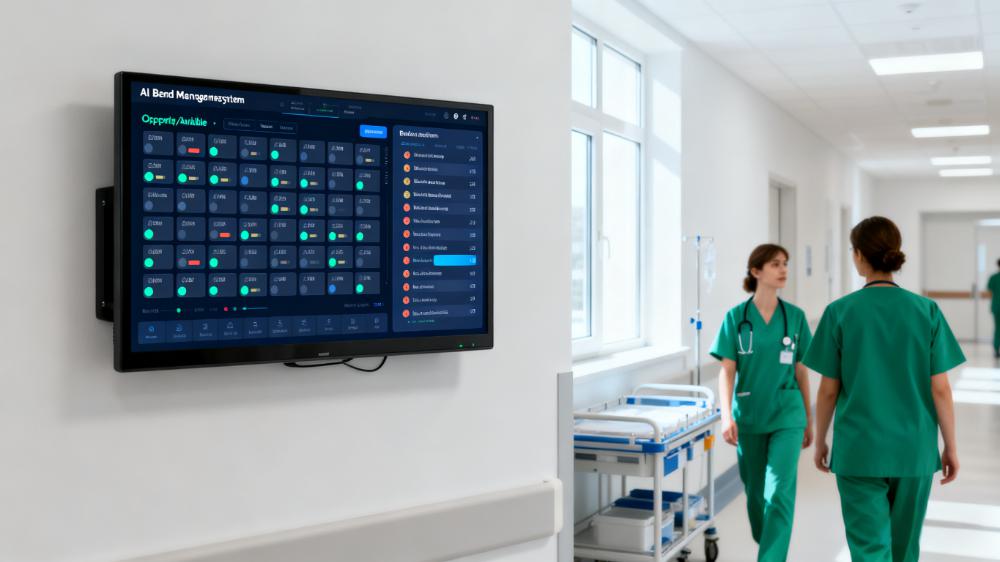
AI bed allocation uses advanced technology to help you manage beds in hospitals. This system predicts how many patients will need beds and finds the best options for each patient. When bed occupancy rates go above 90%, patients might wait longer, face early discharges, or get placed in less suitable wards.
Bed shortages can lower patient care quality and increase staff stress.
Patients may experience delays or have their procedures canceled.
AI now helps you track bed status in real time and improves communication between departments. Solutions like Abridge use AI to turn patient conversations into structured data, reducing paperwork and letting you focus more on patient care. This leads to better efficiency and smoother experiences for both patients and staff.
Key Takeaways
AI bed allocation improves hospital efficiency by predicting bed needs and reducing patient wait times.
Real-time updates and automation streamline patient flow, allowing for quicker decision-making and better resource management.
Using predictive analytics helps hospitals anticipate patient admissions and discharges, enhancing overall care coordination.
AI-driven tools like Abridge reduce administrative burdens, allowing healthcare staff to focus more on patient care.
Maintaining data privacy and ethical standards is crucial when implementing AI solutions in healthcare.
AI bed allocation in healthcare

How ai bed allocation works
AI bed allocation helps you manage hospital beds more effectively. You use advanced technology to match patients with the right beds at the right time. This system relies on several core principles that improve patient flow and capacity management. Here is a table that shows the main principles behind these systems:
Principle | Description |
|---|---|
Predictive Analytics | Analyzes historical and real-time data to forecast future demand for resources, including beds. |
Resource Management | Ensures efficient scheduling of staff, allocation of beds, and availability of medical supplies. |
Optimization Strategies | Implements strategies to enhance the allocation process, reducing inefficiencies in resource use. |
Managing Bed Availability | Predicts bed occupancy rates to allocate beds more efficiently, improving patient care outcomes. |
Real-World Example | A hospital in Asia reduced ICU bed wait times by 30% using AI, enhancing access to critical care. |
When you use AI bed allocation, you see a direct impact on healthcare efficiency. For example, hospitals that use these systems increase patient throughput and satisfaction. The chart below shows how metrics improve after implementing AI bed allocation:
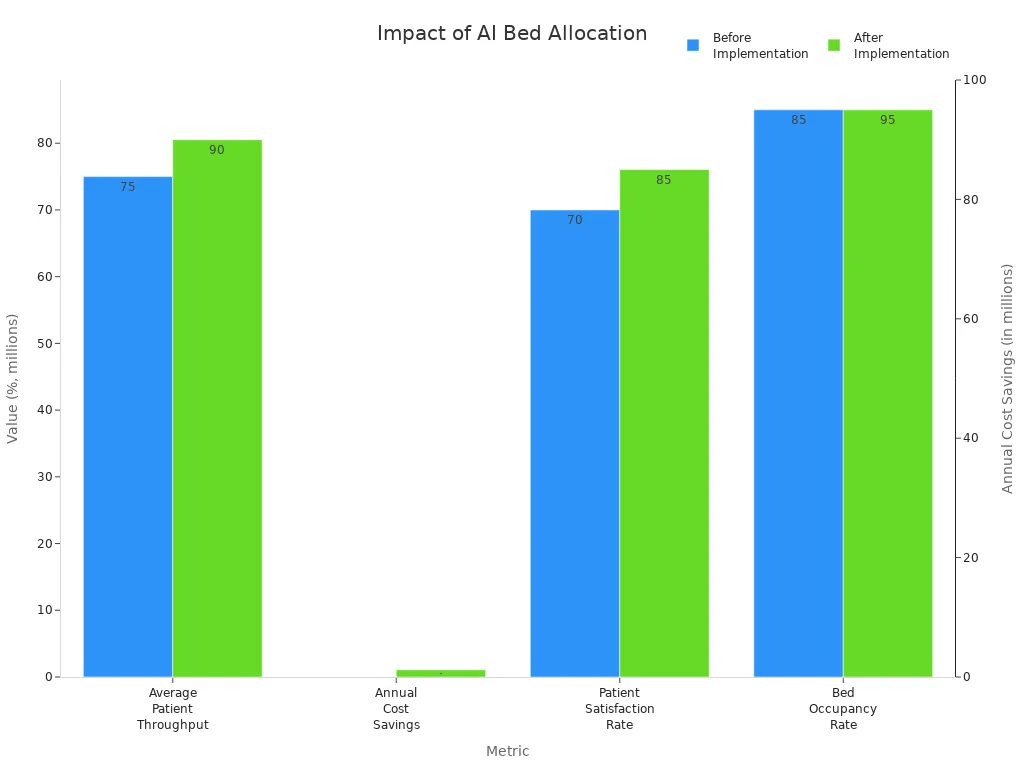
You can see that average patient throughput rises from 75% to 90%. Bed occupancy rate increases from 85% to 95%. Patient satisfaction also improves, and hospitals save money each year. These results show how AI bed allocation supports better patient care and resource use.
Abridge’s AI Medical Documentation is a good example of how AI fits into clinical workflows. With Abridge, you can turn patient conversations into structured data. This reduces paperwork and helps you focus on patient care. When you combine AI documentation with automated bed allocation, you create a seamless process that improves patient flow and capacity management.
Predictive analytics and bed demand forecasting
Predictive analytics is a key part of bed demand forecasting. You use analytics to look at historical data, such as patient admissions and discharges. This helps you predict how many beds you will need in the future. Here are some of the main steps and models used for forecasting:
Machine learning models analyze past admission rates and discharge patterns to predict hospital capacity needs.
ARIMA models help you forecast bed demand by looking at trends over time.
Exponential smoothing and multiple linear regression (MLR) provide more ways to predict future needs.
Neural network-based models can predict bed demand from 1 to 5 days ahead, giving you better forecasting performance.
When you use predictive analytics, you can anticipate bottlenecks and optimize staffing during busy times. AI models have shown an accuracy of 87.2% in predicting hospital stay durations. This high level of precision helps you manage patient flow and capacity more effectively.
You can also use predictive analytics to support real-time decision-making. By extracting patterns from both real-time and historical data, you improve your ability to manage patient flow and resource allocation. This leads to better outcomes for patients and more efficient use of hospital resources.
Real-time updates and automation
Real-time updates and automation are essential for effective AI bed allocation. You need instant visibility into bed status and patient flow to make quick decisions. Here are some key features that support this process:
Key Feature | Description |
|---|---|
Predictive Analytics for Patient Flow | AI analyzes historical data to forecast patient admissions and discharges, enabling proactive planning. |
Automated Bed Allocation | AI assigns patients to appropriate beds based on their needs, minimizing unnecessary transfers. |
Real-Time Bed Status Updates | Provides instant visibility of bed availability across departments, speeding up patient placement. |
Process Automation | Automates routine tasks, reducing errors and easing the workload on staff. |
You can use real-time data analytics to optimize operational processes and improve patient treatment. Real-Time Location Systems (RTLS) give you visibility into patient and resource status. This helps you streamline workflows and ensure resources are available when needed. Automated alerts and dashboards improve communication between departments, allowing you to coordinate quickly and respond to changes in patient flow.
AI and smart bed management software work together to enhance predictive analytics. This combination leads to more accurate bed demand forecasting and improved patient flow. You can dynamically allocate beds based on patient needs and available resources. By predicting discharge dates, you ensure timely patient transitions and reduce wait times.
Tip: Continuous visibility into patient journeys helps you resolve delays quickly, improving patient satisfaction and overall hospital efficiency.
When you use real-time updates and automation, you support lean principles by eliminating waste and reducing idle times. You also improve staff productivity and patient care delivery. Automated bed allocation systems help you adapt to changing conditions and maintain high standards of care.
AI-driven bed management applications
Emergency and ICU optimization
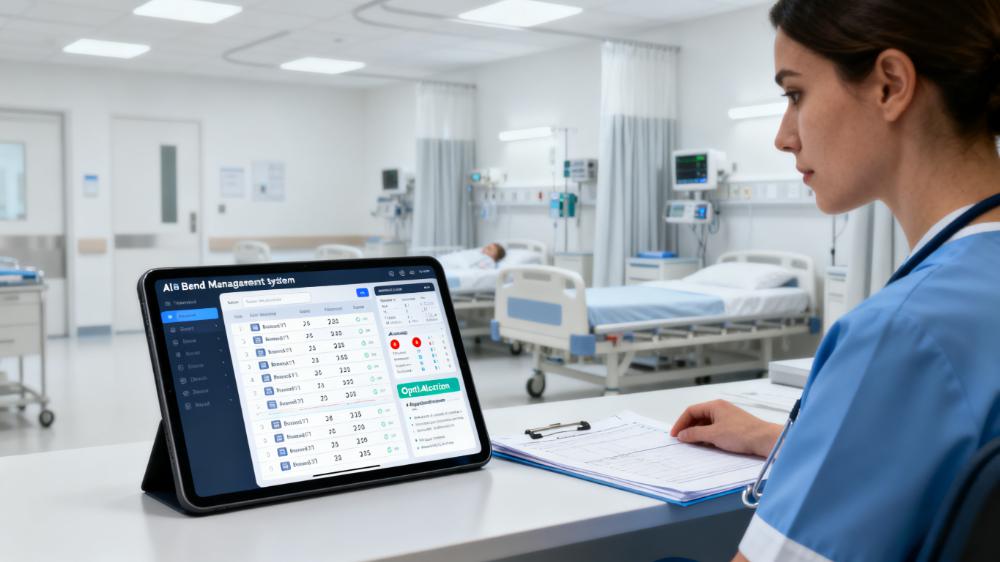
You see the biggest impact of ai-driven bed management in emergency and ICU settings. At Kettering General Hospital, staff used AI to improve bed allocation, making the process feel like a game of Tetris. The system looks at past admission data and predicts which patients will need beds soon. This helps you assign beds quickly and keep patient flow steady. AI-driven bed management systems also help you decide which patients need intensive care beds first. This means you can move patients from admission to discharge without delays. Studies show that AI triage models predict ICU needs better than traditional methods. This reduces overcrowding and ensures that the sickest patients get care fast.
Surgical and post-op bed assignment
You can use ai-driven bed management to make surgical and post-op care smoother. These systems predict how many patients will need beds in the operating room, pre-op, and recovery areas. Here is a table showing how these systems help you manage surgical and post-op beds:
Aspect | Description |
|---|---|
Volume Prediction and Management | Forecasts patient numbers for better staffing and equipment planning. |
Throughput Optimization | Makes sure every room is used well, cutting down on empty time and bottlenecks. |
PACU Scheduling Optimization | Plans patient handovers from surgery to recovery, predicting bed needs and managing workloads. |
Predictive PACU Bed Management | Forecasts recovery room bed needs based on surgery times, reducing wait times. |
Nurse Workload Optimization | Balances nurse schedules by predicting patient needs, ensuring timely and quality care. |
With these tools, you keep patient flow management smooth and avoid delays after surgery.
Resource planning in healthcare
You rely on ai-driven bed management to plan resources across your healthcare facility. These bed management systems use machine learning to predict patient admissions, discharges, and transfers. At Johns Hopkins, the Capacity Command Center uses predictive analytics to prepare for busy times and assign beds efficiently. This led to a 30% drop in emergency wait times and a 60% boost in the hospital’s ability to accept new patients. You also benefit from integration with electronic health record systems. Bed management systems use FHIR standards for real-time data exchange, making sure you always have up-to-date information. This reduces manual data entry and speeds up your workflow. When you use AI Medical Documentation tools like Abridge, you find it easier to complete notes and spend less time on paperwork. Many clinicians report less burnout and more job satisfaction, which helps you focus on patient care.
Benefits and challenges of ai bed allocation
Operational efficiency and patient outcomes
When you use ai bed allocation, you improve both operational efficiency and patient outcomes. Hospitals that use these systems see many benefits:
You reduce wait times for patients who need admission.
Patients get placed in the most suitable care settings, which improves their recovery.
Timely discharges help you free up beds for new patients, supporting better hospital capacity management.
AI-driven predictive models let you adjust staffing based on patient volume, which boosts patient throughput and care coordination.
Real-time monitoring of bed status across departments helps you predict bed availability and manage hospital capacity needs.
These improvements mean you can handle more patients without sacrificing quality. You also see better care coordination between teams. When you use ai bed allocation, you support patient care and make sure each patient gets the right treatment at the right time. This leads to better outcomes and higher satisfaction for both patients and staff.
Data privacy and system integration
You must pay close attention to data privacy when you use ai bed allocation systems. These tools rely on large amounts of sensitive patient data. Protecting this information is essential for trust and safety. Here is a table that shows the main data privacy concerns:
Concern Type | Description |
|---|---|
Handling of Sensitive Data | AI systems rely on vast amounts of sensitive patient data, necessitating strict protection measures. |
Misuse of Data | Unauthorized access and misuse of patient information must be prevented through careful management. |
Bias and Discrimination | AI can perpetuate biases from training data, leading to unfair healthcare decisions. |
Accuracy of AI Decisions | Inaccurate data can result in wrong diagnoses or treatment plans, impacting patient safety. |
Transparency in AI Processes | Clear communication about AI decision-making fosters trust among patients and healthcare providers. |
You also face challenges with system integration. Hospitals often use many different IT systems. You need to make sure your ai bed allocation solution works well with these systems.
To effectively integrate AI bed allocation solutions, you must ensure that these tools can operate alongside existing IT systems. This involves collaboration among healthcare teams, including doctors and IT professionals, to verify compatibility and create necessary connections. Additionally, staff training is crucial to help them adapt to new workflows and maximize the benefits of AI.
When you address these challenges, you improve care coordination and make the most of your hospital capacity. You also support better capacity management and resource allocation.
Human oversight and ethical issues
You must always keep human oversight in mind when you use ai bed allocation. Ethical issues can arise, especially when you handle sensitive patient data or make decisions about resource allocation. Here are some important points to consider:
Ethical concerns about data protection and privacy require careful regulation of AI technologies.
You need to understand the risks of using AI in healthcare, even as you push for innovation.
The lack of regulatory oversight can create risks when you use resource allocation algorithms.
Current laws may not fully protect individual health data, which can lead to privacy breaches.
You play a key role in making sure AI supports, rather than replaces, human judgment. You should always review AI recommendations and ensure fairness in patient care. By keeping strong ethical standards, you protect both patients and your healthcare organization.
AI solutions like Abridge help you reduce administrative burdens. Here is how they support better care coordination and efficiency:
Abridge converts patient-doctor conversations into clear notes, which reduces the time you spend on paperwork.
Most clinicians using Abridge report higher job satisfaction, and many feel less burnout from administrative tasks.
AI automates routine work, so you can focus more on patient care and less on documentation.
When you use these tools, you improve operational efficiency, support better patient outcomes, and strengthen care coordination across your facility.
Future of ai in healthcare
Innovations and trends
You see many new innovations shaping the future of AI in healthcare. Hospitals now use smart bed technology to track patient movement and vital signs in real time. This helps you respond faster and improve patient care. For example, Johns Hopkins Medicine uses AI-enabled beds to boost response efficiency. Mayo Clinic tested smart beds with predictive analytics and saw a 40% drop in pressure ulcer cases. UCLA Health uses AI-powered beds to help patients recover after surgery, reducing discomfort by 35%. Cleveland Clinic connects smart beds to electronic health records, making it easier for nurses to manage patient data.
Institution | Innovation Description | Impact Description |
|---|---|---|
Johns Hopkins Medicine | AI-enabled beds track patient movement and vitals in real time | Improved response efficiency |
Mayo Clinic | Smart bed technology with predictive analytics | 40% fewer pressure ulcer cases |
UCLA Health | AI-powered beds for post-surgical recovery | 35% less patient discomfort |
Cleveland Clinic | AI-driven smart beds integrated with EHR systems | Streamlined data management, reduced nurse workload |
You also notice trends like predictive analytics for resource planning, workflow optimization, and automation of routine tasks. AI helps you forecast patient admissions and discharges, manage staff schedules, and make better capacity decisions. Hospitals report a 37% drop in ICU transfer times and a 4% faster patient admission rate. These advances help you use your resources wisely and improve patient outcomes.
Expansion and regulatory considerations
AI bed allocation will soon reach beyond hospitals. You will see these tools in homes and offices, where they support remote monitoring and telehealth. This expansion gives patients more access to care and helps you deliver personalized treatment. AI tools can connect patients and providers, making healthcare more flexible and tailored to each person’s needs.
As AI grows, you must pay attention to ethical and regulatory frameworks. You need clear rules to protect patient data and ensure fair use of AI. Strong oversight helps you build trust and keep patient safety at the center of healthcare. By following these guidelines, you can use AI to boost capacity, improve patient care, and shape the future of healthcare.
AI bed allocation transforms how you manage hospital resources and patient care.
You use AI-driven tools to analyze data, improve decision-making, and reduce wait times.
Early alerts and predictive analytics help you act quickly, leading to better patient outcomes and less stress for staff.
Experts say you need transparency, accountability, and strong ethical frameworks to guide these innovations.
You will see ongoing advancements as solutions like Abridge continue to shape a safer, more efficient future for healthcare.
FAQ
What is AI bed allocation?
AI bed allocation uses computer programs to help you assign hospital beds to patients. The system looks at data and predicts which beds will be needed. This helps you make faster and better decisions for patient care.
How does AI improve hospital efficiency?
You use AI to track bed status and patient flow in real time. The system gives you quick updates and helps you plan ahead. This reduces wait times and helps you use resources wisely.
Is patient data safe with AI bed allocation systems?
You must protect patient data. Hospitals use strong security tools and follow privacy rules. AI systems only use data for patient care and planning. Staff receive training to keep information safe.
Can AI bed allocation work with electronic health records (EHR)?
Yes, you can connect AI bed allocation systems with EHR. This lets you share information quickly. You spend less time on paperwork and more time helping patients.
What are the main benefits of using AI for bed management?
Benefit | Description |
|---|---|
Faster Admissions | You place patients in beds more quickly. |
Better Patient Care | You match patients to the right resources. |
Less Staff Burnout | You reduce paperwork and manual tasks. |
See Also
Real-Time Multi-Modal AI Companions With Enhanced Memory Systems
The Comprehensive Stack for AI-Driven Sales Solutions
Courses Offered by HuggingFace for AI Enthusiasts
Jule: The AI Assistant Streamlining Software Development Processes

© Copyright 2025 LinkstartAI - All Rights Reserved.