AI Agents vs Traditional Foreign Teachers

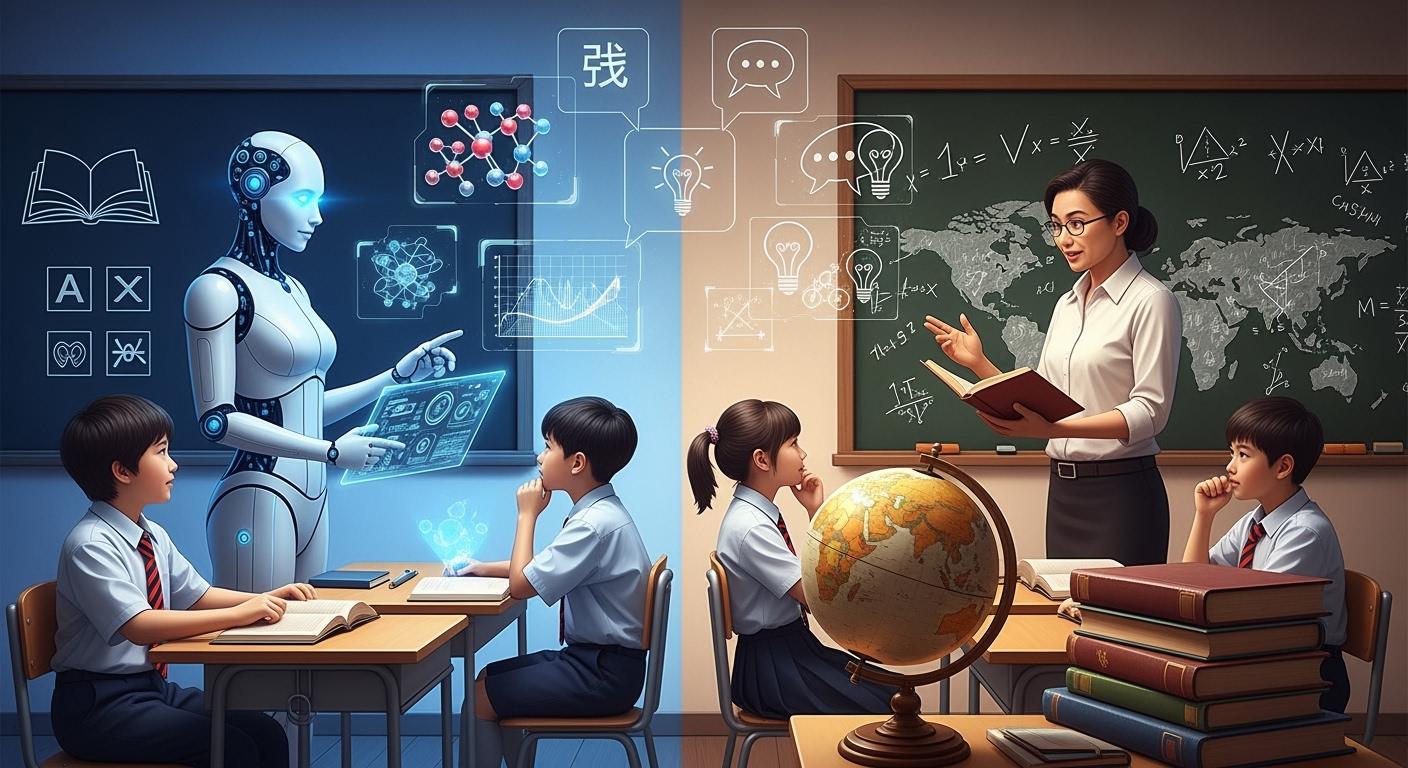
If you want to get better at English, you may wonder what works best: AI Agents vs Traditional Foreign Teachers. Many students today feel more interested and less nervous with AI-powered platforms. In fact, 75% of students enjoy learning that is tailored specifically for them, but only 30% feel the same about traditional classes. Both options have their advantages. Some people appreciate receiving quick feedback from tools like Fluently, while others prefer engaging with real people. You might also want to keep track of your progress in Notion. Consider what aligns with your learning style and what keeps you motivated to learn.
Key Takeaways
AI agents give you lessons that fit you. They change lessons to match what you need and like.
Traditional teachers are real people who talk with you. They help you learn about culture. They also give you support when you feel upset.
Both AI agents and traditional teachers help you get better at language. But they are best at different things. AI agents give fast feedback and practice. Teachers help you learn about culture.
Think about how you like to learn and what you want to do. This will help you pick between AI agents and traditional teachers. Using both can help you learn more.
Use AI agents when you want to practice anytime. Use traditional teachers when you want to talk more and learn about culture.
AI Agents vs Traditional Foreign Teachers: Effectiveness
AI Agents’ Results
You may ask if AI agents really help you learn. Studies say they do. One test watched 262 young students for three months. The group using a smart AI system got better at speaking, understanding culture, and talking with others. Their scores went up by almost 19 points. The system used speech recognition and deep learning. These tools gave fast feedback and helped students talk in real ways.
Here’s a quick look at what the study found:
Aspect of Study | Details |
|---|---|
Study Focus | Impact of AI-enhanced language learning on intercultural communication |
System Design | Deep learning and advanced language models |
Methodology | 262 learners, 3-month experiment |
Key Findings | Big gains in fluency, culture, and communication (avg. +18.9 points) |
Long-term Effects | Lasting improvement in language skills |
Technology Used | Speech recognition, text-to-speech, AI models |
AI agents help you set goals and see your progress. You get feedback right away, so you can fix mistakes fast. Many people feel more excited because lessons match what they like.
Traditional Teachers’ Impact
Traditional foreign teachers have helped students for many years. You get a real person who can answer questions and share stories. Many students like learning from native speakers as they get older. Some choose non-native teachers for grammar help. A study found that 80% of English teachers are non-native speakers, but students often want native speakers for talking practice.
Learning about culture is important when you study a language. The American Council of Foreign Language says you need to know the culture to master the language. Native teachers can show you their world. Non-native teachers may help you see the language in new ways because they learned it too.
Comparative Insights
Let’s compare AI agents and traditional teachers. You can see how each one helps you learn:
Aspect | AI Agents | Traditional Foreign Teachers |
|---|---|---|
Self-Regulation | One-size-fits-all approach | |
Motivation | Tailored lessons boost motivation | Depends on teacher style and student engagement |
Feedback | Instant and detailed | Sometimes delayed |
Accessibility | Available anytime, anywhere | Limited to class times |
Learning Materials | Adaptable and diverse | Often fixed curriculum |
Big studies show both AI agents and teachers help you learn words and grammar. AI agents are great for speaking and listening. They let you practice in short times, which helps if you are busy. Traditional teachers are best in classrooms and help you learn about culture.
Here’s another table to help you see the differences:
Factor | AI Agents Effectiveness | Traditional Teachers Effectiveness |
|---|---|---|
Knowledge Acquisition | Similar to traditional methods | Similar to AI methods |
Practical Skill Development | Fewer advantages | |
Student Engagement | Often higher | Varies |
Contextual Effectiveness | Best in certain settings | Works in most settings |
Emotional Support | Positive impact on motivation and anxiety | Less impact on emotions |
Tip: If you want fast feedback and flexible practice, AI agents may be good for you. If you like stories and face-to-face help, traditional teachers may be best.
You can see that choosing AI agents or traditional teachers depends on what you need. Some students use both to get the best results.
Personalization and Adaptability
AI-Driven Customization
You want your learning to fit you, not the other way around. That’s where AI agents shine. They look at how you learn and what you need. Then, they change lessons just for you. For example, if you read well, the AI gives you harder texts. If you need help, it makes things easier. You get feedback on your writing style and even see content that matches your culture. This makes learning feel more personal and fun.
Here’s a quick look at how AI agents customize your experience:
Feature | Description |
|---|---|
AI checks your reading and gives you the right level of text. | |
Cultural Relevance Personalization | You see stories and examples that match your background. |
Writing Style Development | The AI gives tips based on how you write and helps you improve. |
AI agents also watch how you do on quizzes. If you miss a question, they suggest a quick review. You might see different lessons than your friend, because the AI knows what you need. This keeps you interested and helps you learn faster.
"The worst thing you can do is give people irrelevant learning. AI can help focus precisely on what is important to the individual."
Human Teacher Flexibility
Teachers bring something special to the table. They notice how you learn and change their lessons to help you. Maybe you like pictures, or maybe you learn best by talking. Teachers use different tools for each style.
Strategies | |
|---|---|
Visual Learners | Use charts, diagrams, and pictures. |
Auditory Learners | Tell stories and have group talks. |
Reading/Writing Learners | Give books and let you write or draw. |
Kinesthetic Learners | Use hands-on games and let you move around. |
Teachers also give feedback right away. Sometimes, you get to help your classmates by sharing ideas. In groups, teachers can spot problems and help everyone fix them. This makes learning feel like a team effort.
When you look at AI Agents vs Traditional Foreign Teachers, you see both can make learning fit you. The best choice depends on how you like to learn and what keeps you going.
Accessibility and Efficiency
AI Agents’ Availability
You can learn English when you want. AI agents let you study any time. You do not have to wait for a class. You can practice late at night or early in the morning. If you live far away, you still get good lessons. AI agents use smart tools to help you learn better. They give you lessons that fit your needs.
Here is a table that shows how AI agents and teachers are different:
Feature | AI Language Learning Agents | Traditional Foreign Teachers |
|---|---|---|
Availability | You can use them anytime, so it is flexible | You must go to class at certain times |
Personal Interaction | No real person, which can change how you feel | You talk to a teacher and get feedback |
Customization | AI uses data to make lessons just for you | Teachers change lessons, but it depends on them |
Resource Availability | AI gives you lots of quizzes and exercises | Teachers use books and classroom tools |
AI agents help people who live far away. You get lessons that match your level. They use translation tools to help you understand. You can join online classes and meet students from other places.
AI agents make lessons that fit you.
They help you learn new words in your language.
You can join online classes and talk to others, even if you speak different languages.
Tip: If you are busy or live far away, AI agents help you learn easily and when you want.
Teacher Access and Scheduling
Teachers give you feedback and tell stories. You learn from someone who knows the language well. But you must plan your time for classes. Classes happen at set times. Sometimes, you wait days for your next lesson. If you want extra help, you may need to ask early. In some places, it is hard to find a good teacher. You might need to travel or join a group class.
When you compare AI agents and teachers, you see big differences. AI agents let you learn when you want. Teachers give you a real person to talk to, but you need a schedule.
Interaction Quality
Conversational Experience with AI
Talking to an AI agent feels different from talking to a person. The AI listens and gives you feedback right away. You can practice speaking and try new words. If you make mistakes, you do not have to feel embarrassed. Many students say they feel less nervous with AI. You can repeat lessons as much as you want. The AI changes its questions to match what you like or need for your job.
Here’s a table that shows how AI agents and teachers are different in language practice:
Aspect | AI Agents | Traditional Teachers |
|---|---|---|
Feedback Timing | Immediate feedback on errors | Delayed feedback |
Personalization | Adapts to your learning needs | Fixed lessons |
Practice Environment | Interactive simulations | Classroom setting |
Anxiety Reduction | No-pressure, low-anxiety | May not reduce anxiety |
Skill Development | Focus on industry-specific language | General language skills |
AI agents help you practice in a way that feels safe. You get to work on what is important to you.
Human Connection and Culture
Learning with a real teacher gives you something special. You connect with a person and learn about their life. Teachers share stories, traditions, and jokes from their culture. This helps you learn how people use the language every day.
You learn about culture, not just grammar.
Teachers help you understand yourself and respect others.
Teachers bring culture into class in fun ways:
You could celebrate holidays from other countries.
Teachers talk about places where people speak the language.
You may watch movies, read stories, or talk about special days. These activities help you care about others and learn to work with people everywhere. Teachers help you see new ideas and grow as a person.
When you compare AI agents and teachers, both have good things. AI gives you a safe place to practice and get better fast. Teachers give you real connection and help you learn about new cultures.
AI Agents in Practice
The 3-Stage Workflow
You might wonder how AI agents actually help you learn in real life. Let’s break it down into three simple steps:
Passive Absorption
You start by using your spare moments—like your commute or while cooking—to listen to podcasts, watch YouTube videos, or read emails in English. This helps you pick up new words and phrases without even thinking about it.Active Summary
In the evening, you open an app like Fluently. You talk about what you learned that day. The AI acts like a friendly coworker or friend. It listens, gives you instant feedback, and points out your key mistakes. You get to practice speaking in a safe space.Refinement & Archiving
After your session, the AI creates a report of your most common errors. You can save these in a digital phrasebook. If you have questions, you can ask the AI for more examples or explanations. Over time, you build a personal library of phrases that fit your real life.
Core Value and Outcomes
AI agents use the 20/80 rule. You focus on the 20% of mistakes that cause 80% of your problems. This means you spend your time fixing what matters most. You get instant feedback and error correction, so you improve faster.
If you’re a working professional or a lifelong learner, you probably don’t have hours to spare. AI agents let you turn short breaks into real progress. Here’s what many busy learners say they love:
Benefit | Description |
|---|---|
Lessons adapt to your needs and interests. | |
Enhanced Engagement | Interactive sessions keep you motivated. |
Integration into Schedules | You can learn during short breaks, making it easy to fit into your day. |
You use AI roleplay and error tracking for better results.
You make every spare minute count.
When you look at AI Agents vs Traditional Foreign Teachers, you see how AI agents help you learn in a way that fits your busy life. You build confidence, speak more naturally, and create a digital phrasebook that grows with you.
Limitations and Challenges
AI Agents’ Weaknesses
AI agents can help you learn, but they do have some weak spots. You might notice that talking to an AI does not always feel like talking to a real person. Here are some things you may run into:
AI does not really understand feelings. If you feel upset or excited, the AI might not pick up on your mood.
Sometimes, the AI misses the small details that make language sound natural. It may not always teach you the little jokes or cultural habits people use every day.
AI depends on data and algorithms. If you say something in a new way, the AI might not get what you mean.
Chatbots often lack empathy. They may not know when you feel confused or frustrated, so they cannot always help you feel better.
If you want to talk about your day or share a story, the AI might not respond in a way that feels personal.
Note: Many learners enjoy the safe space AI provides, but you may miss the warmth and understanding that comes from a real conversation.
Human Teacher Limitations
Human teachers bring a lot to the table, but they also face some tough challenges. You might see these issues in your own classes:
Some teachers do not have enough training or the right qualifications.
Big classes can make it hard for teachers to give everyone attention.
Cultural and social differences can sometimes cause misunderstandings.
Teachers may not always have the newest books or technology.
Parents may not always help with your learning at home.
Teachers can feel tired or stressed, especially if they have too much work or teach online alone.
You may have noticed these problems, especially when schools moved online:
Many were not ready to use new technology.
Some teachers did not like using computers for teaching.
More work made some teachers feel burned out.
Tip: Every learning method has its own set of challenges. Knowing these can help you choose what works best for you.
Choosing the Right Fit
Best for Different Learners
You might wonder which option fits you best. Every learner has different needs. If you love technology and want to practice anytime, AI agents can give you that freedom. You get instant feedback and can use your phone or laptop anywhere. This works well if you have a busy schedule or want to learn in short bursts.
Some people feel more comfortable with a real teacher. You might like sharing stories or asking questions face-to-face. Teachers can help you understand culture and give you support when you feel stuck. If you enjoy group activities or want to learn about daily life in another country, a traditional teacher can guide you.
Here are some questions to help you decide:
Do you want to learn at your own pace?
Do you need help with speaking or writing?
Do you like learning about culture and traditions?
Do you feel shy speaking in front of others?
Your answers can show you which path fits your style.
Blended Approaches
You do not have to choose just one way. Many learners mix both methods for the best results. You can use AI agents for daily practice and quick feedback. You can meet with a teacher for deeper talks and cultural lessons. This mix helps you get the most out of your study time.
Let’s look at how combining both can help:
Evidence Type | Description |
|---|---|
AI Agents' Impact | AI agents boost your learning and keep you engaged, especially with technical topics. |
Complementary Role | AI agents support your teacher, especially when things get tricky. |
Teacher Role Evolution | Teachers can focus on big ideas and mentoring, making your education even better. |
Tip: Try using both AI agents and traditional teachers. You might find that this mix helps you learn faster and enjoy the process more.
When you compare AI Agents vs Traditional Foreign Teachers, you see that a blended approach can give you the best of both worlds. You get flexibility, personal support, and a deeper understanding of language and culture.
You have many choices for learning a language. AI agents give you quick feedback and fit into your busy life. Traditional teachers bring real stories and culture to your lessons. You can even mix both for the best results.
Think about your goals.
Try different methods.
Notice what helps you learn best.
Remember, the right choice is the one that keeps you growing and excited to learn!
FAQ
What makes AI agents good for busy people?
You can practice anytime. AI agents fit into your schedule. You do not need to wait for a class. You can learn during lunch or while riding the bus.
Can I use both AI agents and traditional teachers?
Yes! Many learners mix both. You can use AI for daily practice and meet with a teacher for deeper talks. This combo helps you learn faster.
How does instant feedback help me improve?
Instant feedback shows your mistakes right away. You can fix them before they become habits. This helps you speak and write better, step by step.
Will I learn about culture with AI agents?
You will learn some culture with AI agents. For deeper stories and real-life examples, teachers can help more. Try both to get the best of language and culture.
See Also
Comparing AI Tools: Fluently, ELSA, Speeko For Accuracy
Challenges Faced By AI Agents In Enhancing English Speaking
Reasons Professionals Avoid Speaking English Even After Years

© Copyright 2025 LinkstartAI - All Rights Reserved.